

Making of Black Templars Light Cruiser
The Black Templars Light Cruiser began as a reference-driven concept study: I gathered Warhammer 40K fleet imagery, gothic naval motifs, and Imperial cruiser kits to define silhouette and ornamentation. The entire ship was modeled in Autodesk 3ds Max, focusing on hard-surface modularity so the hull, superstructure and weapons could read clearly at scale. The images below walk through the finished clay renders and close-up detail shots that show how the cruiser’s architecture, armament bays, and decorative motifs come together.

This first render shows the full cruiser in a red clay material to emphasize form and silhouette. From this angle you can read the ship’s overall proportions — the long, layered hull, stacked superstructure, and prow profiles — without the distraction of textures. Using clay renders early helps confirm the cruiser’s mass, balance and how its cruciform Black Templars motifs will silhouette against space.
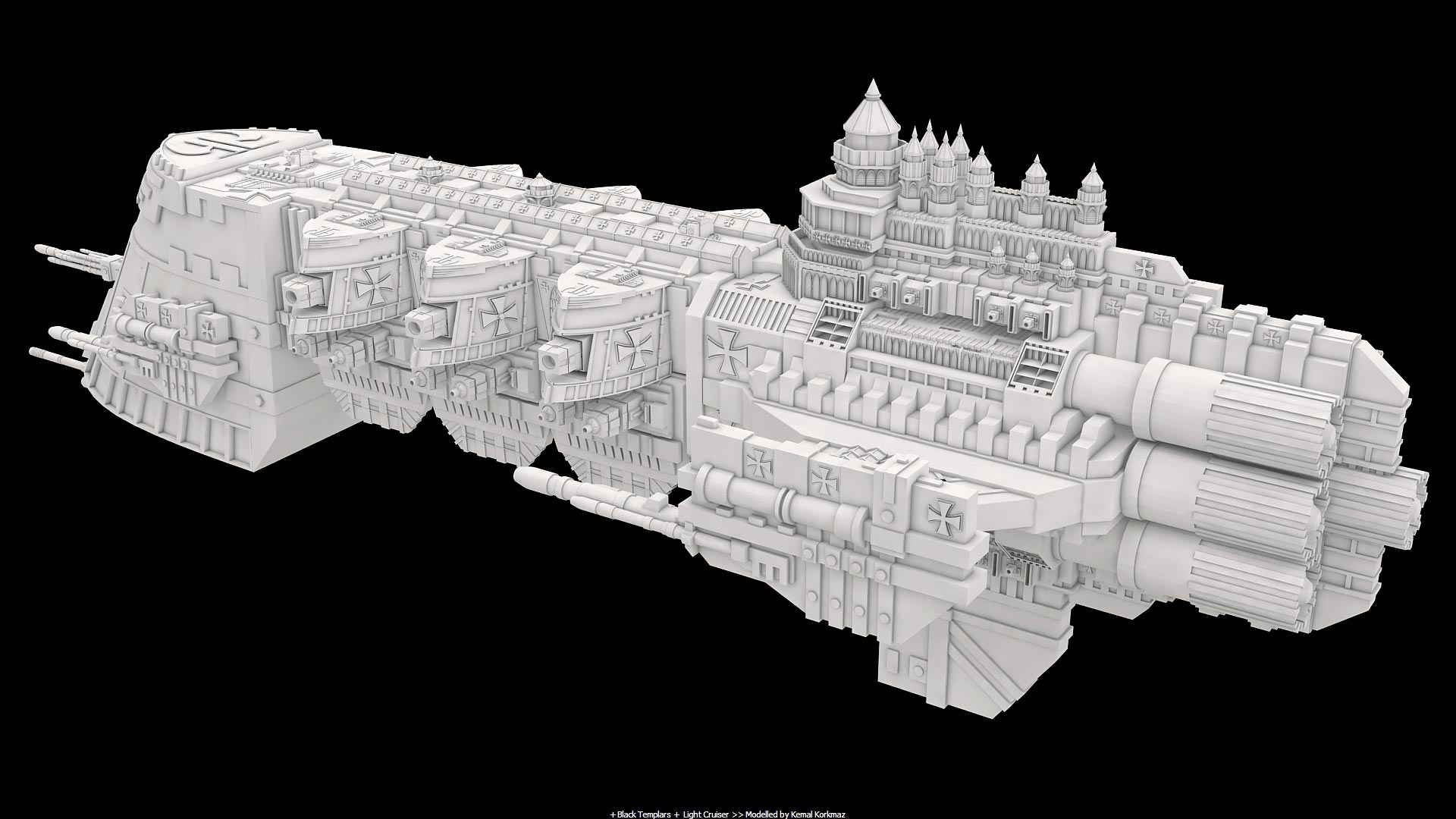
Here is a neutral, high-resolution clay pass that exposes the model’s surface complexity: tiers of hull plating, hull-mounted structures, and the fortress-like citadel on the dorsal deck. This view was used to check geometry density and to ensure that even small architectural elements, like buttresses and parapets, hold clear shapes in close-up.
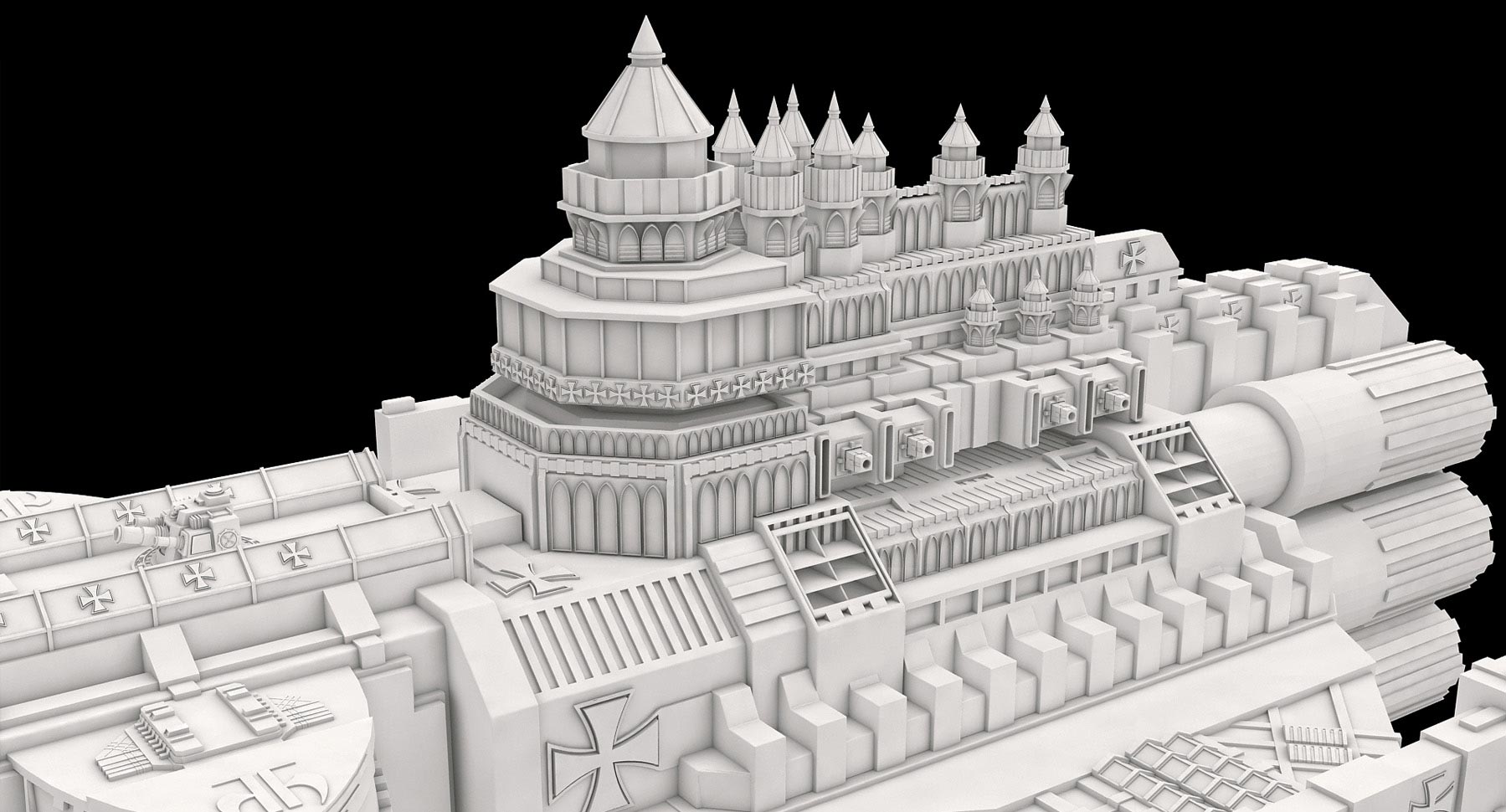
A tight crop on the cruiser’s central “castle” shows the layered gothic architecture — turrets, buttresses, chapel-like towers and heavy decking. I emphasized readable block-ins and repeated modular ornaments so these elements remain crisp in silhouette and can be reused across other fleet assets.
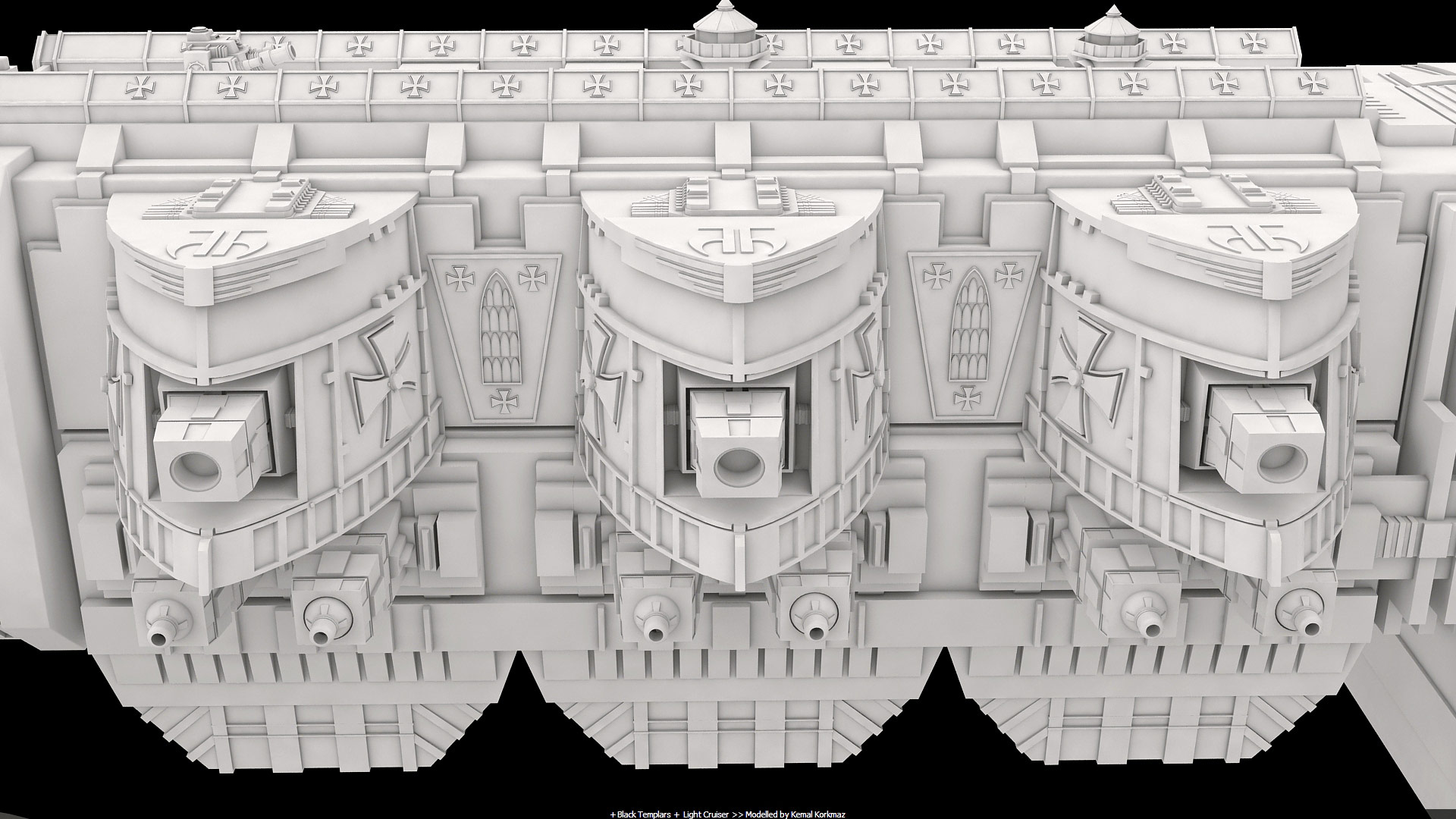
This image focuses on the stern section and adjacent weapon bays. You can see the engine housings and recessed launcher banks modeled with robust mounting geometry. The recessed cavities, exhaust ports and armored flanges were built to read strongly in clay and to be easily adapted for texture baking later.
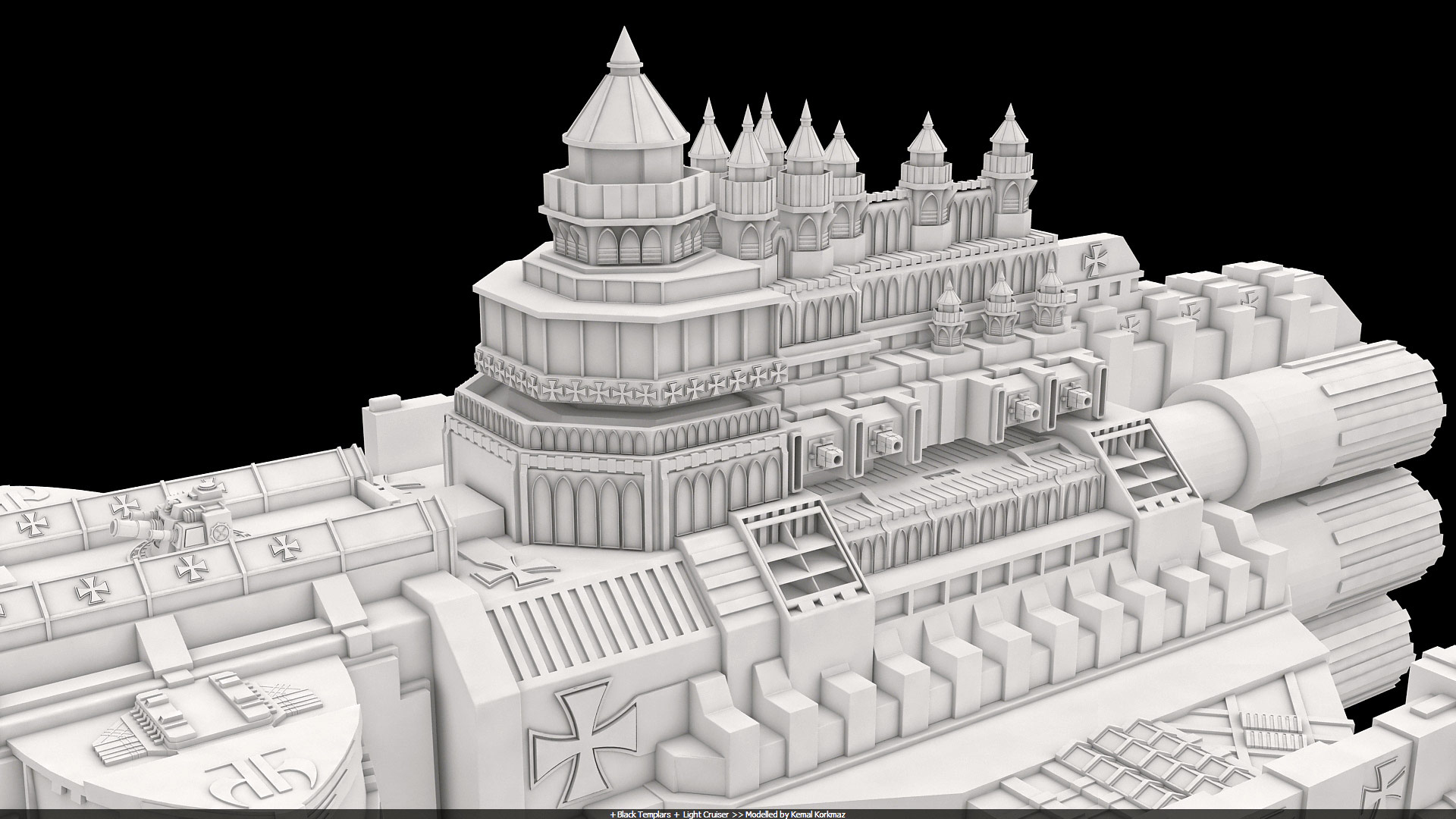
The side profile close-up highlights the ship’s modular hull panels, side-mounted sponsons, and service fittings. I used repeated panel stamps and reliefs to create a believable naval skin — the sort of heavy, maintained-yet-repaired look that fits a Black Templars vessel.
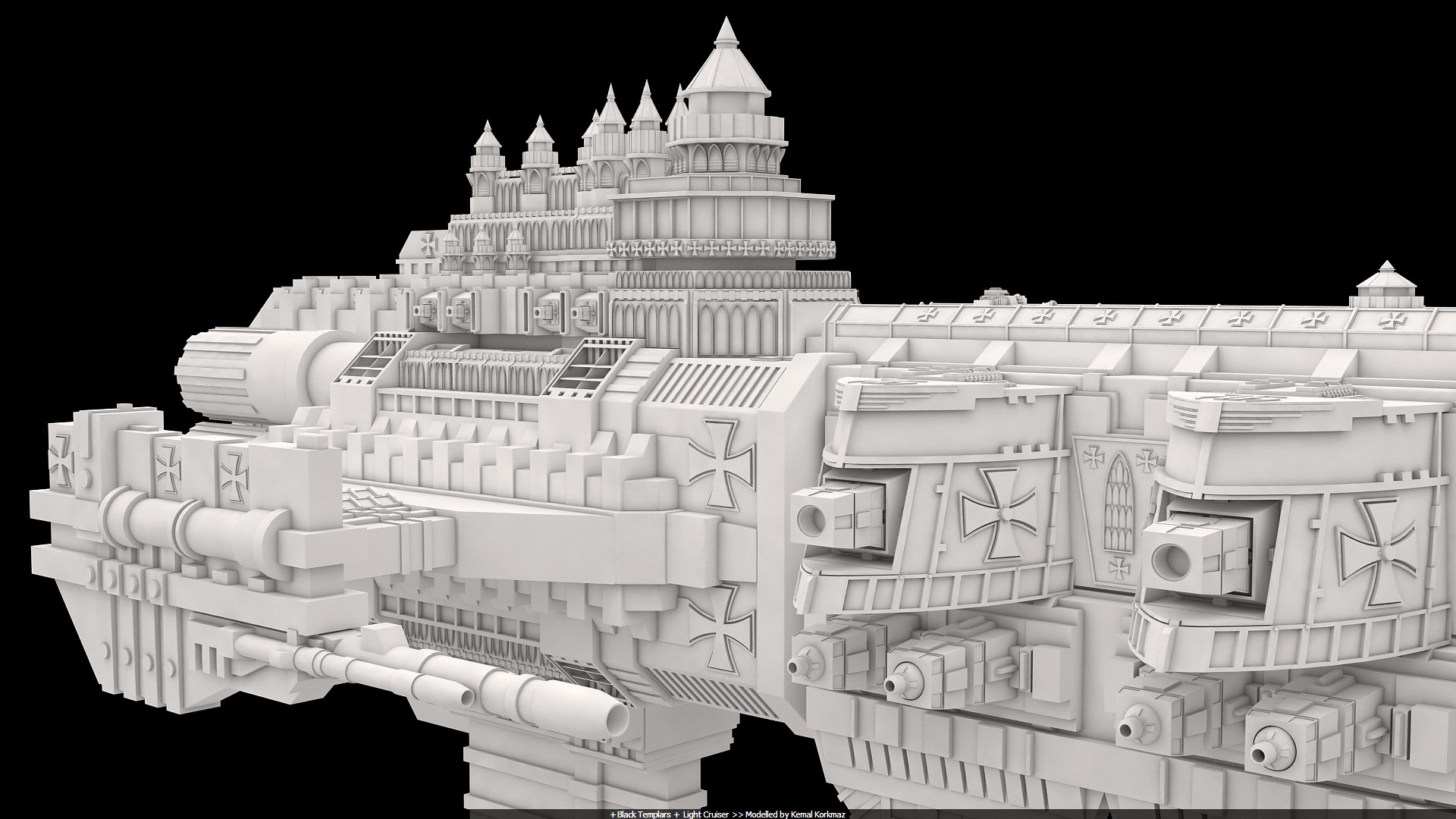
This frontal view shows the prow treatment: forward weapon muzzles, armored beak, and decorative iconography zones. The prow’s layered plates and sharp bevels are crafted to throw highlights in final lighting and to convey a pugnacious, cathedral-like front that befits imperial warcraft.
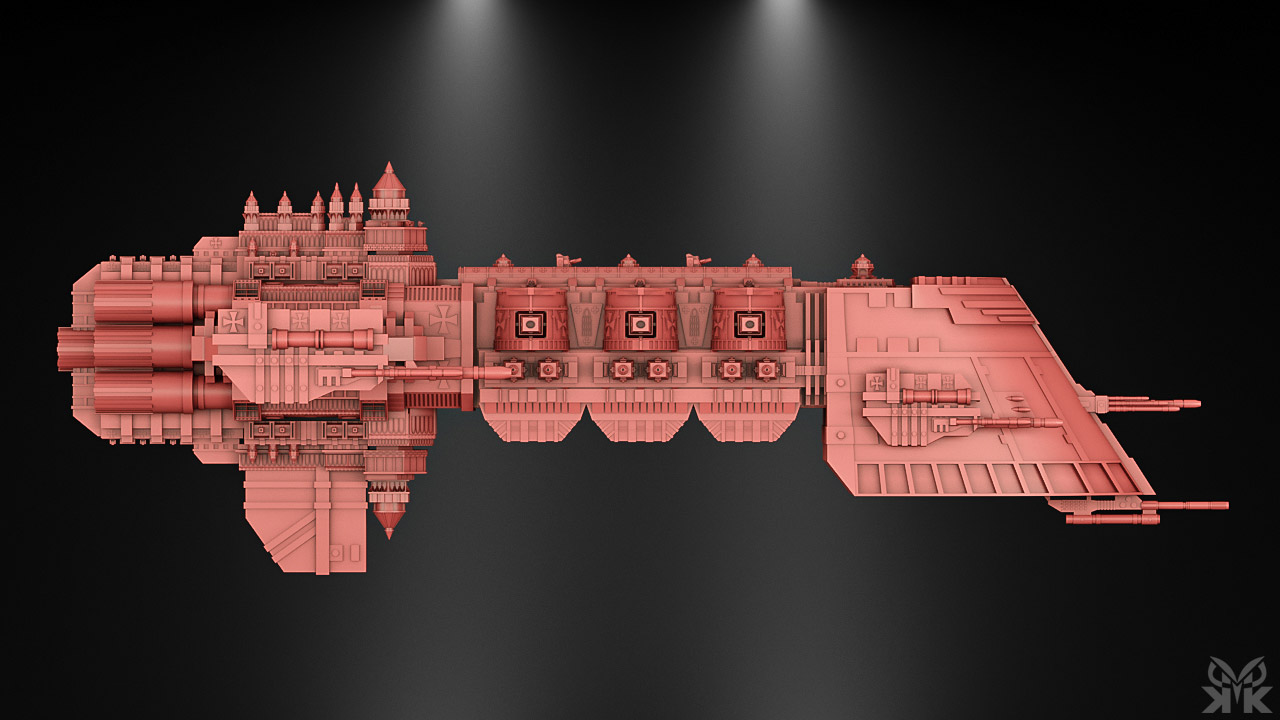
The final red-pass view combines a slightly raised camera with a side silhouette to underline the cruiser’s rhythm of repeating bays and rooftop towers. This composition verifies that the ship reads coherently at a distance and that the repeated motifs create the intended fleet identity.
Modeling the Black Templars Light Cruiser in 3ds Max was a great exercise in marrying gothic architecture with naval hard-surface design. The modular approach made it easy to iterate on ornamentation and to keep the ship’s silhouette readable at multiple scales. Next steps will be UV unwrapping, texture baking, and a lookdev pass with materials and emissive effects to bring the cruiser from clay study to a finished fleet asset.
No Comments