
Warhammer 40K: Modelling Black Templars Automated Orbital Sentinel
Designed in: Plasticity | Project Type: Warhammer 40K Hard-Surface Asset Design
The Orbital Sentinel is a project I began with the goal of combining precise hard-surface modeling with rich visual storytelling. Inspired by the gothic and mechanical aesthetic of Warhammer 40K, I set out to create a spacecraft that would feel ancient, functional, and sacred at the same time. The project started entirely in Plasticity, allowing me to focus on building clean, accurate geometry while experimenting with form and proportion. I explored shapes and structures that could blend heavy industrial engineering with a cathedral-inspired silhouette.
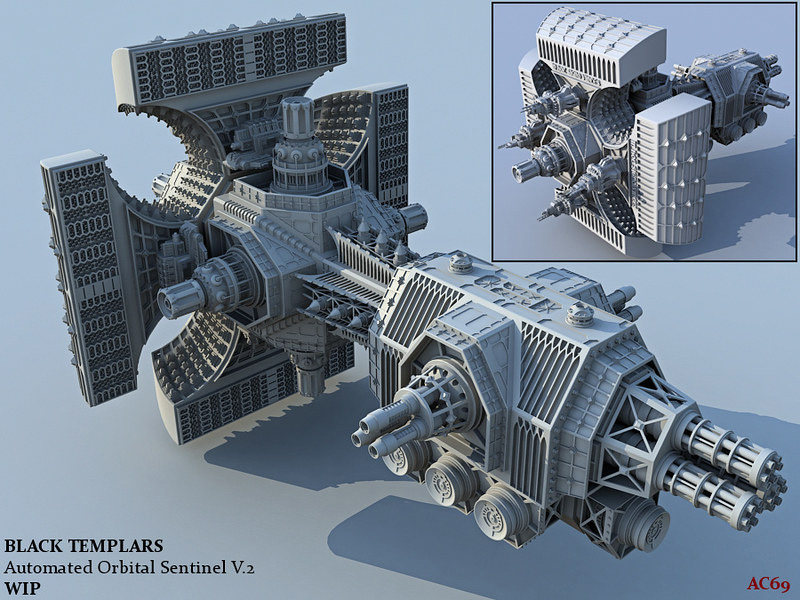
The render created by Andrea1969 served as the primary visual reference for this project. Its balance of gothic architecture, mechanical complexity, and Imperial design language provided valuable inspiration throughout the design process.
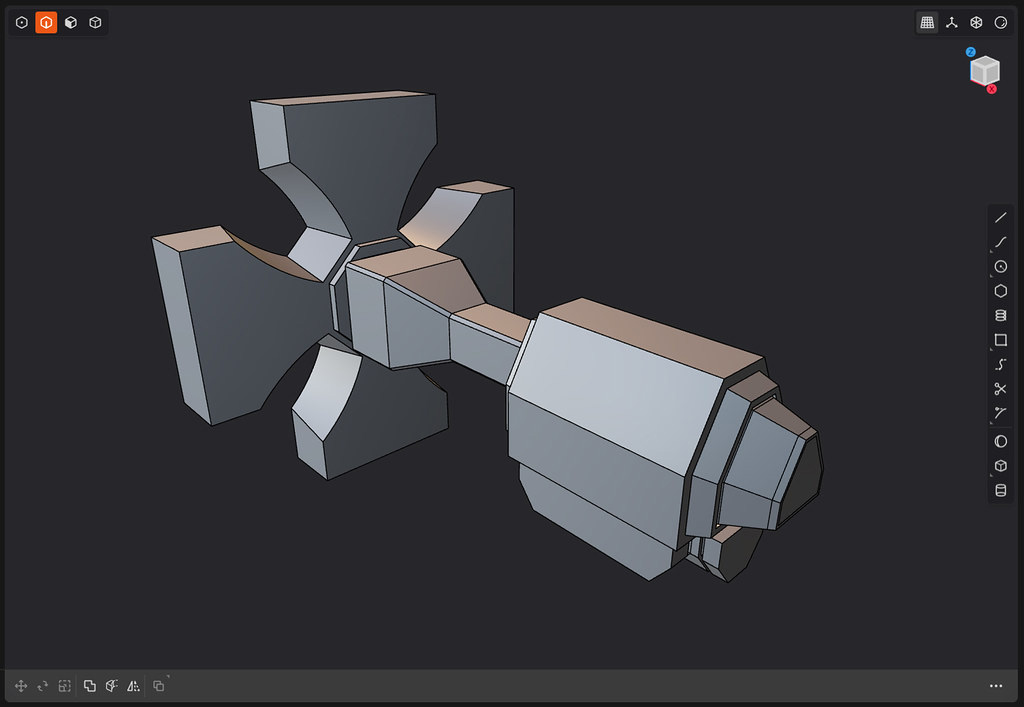
At the earliest stage, I established the overall silhouette of the model. Working in Plasticity, I blocked out the general massing of the Sentinel using simple primitive shapes, gradually defining its broad armor surfaces and structural layout. My focus was on creating a solid, believable foundation that could support the heavy, cathedral-inspired aesthetic of the Warhammer universe.
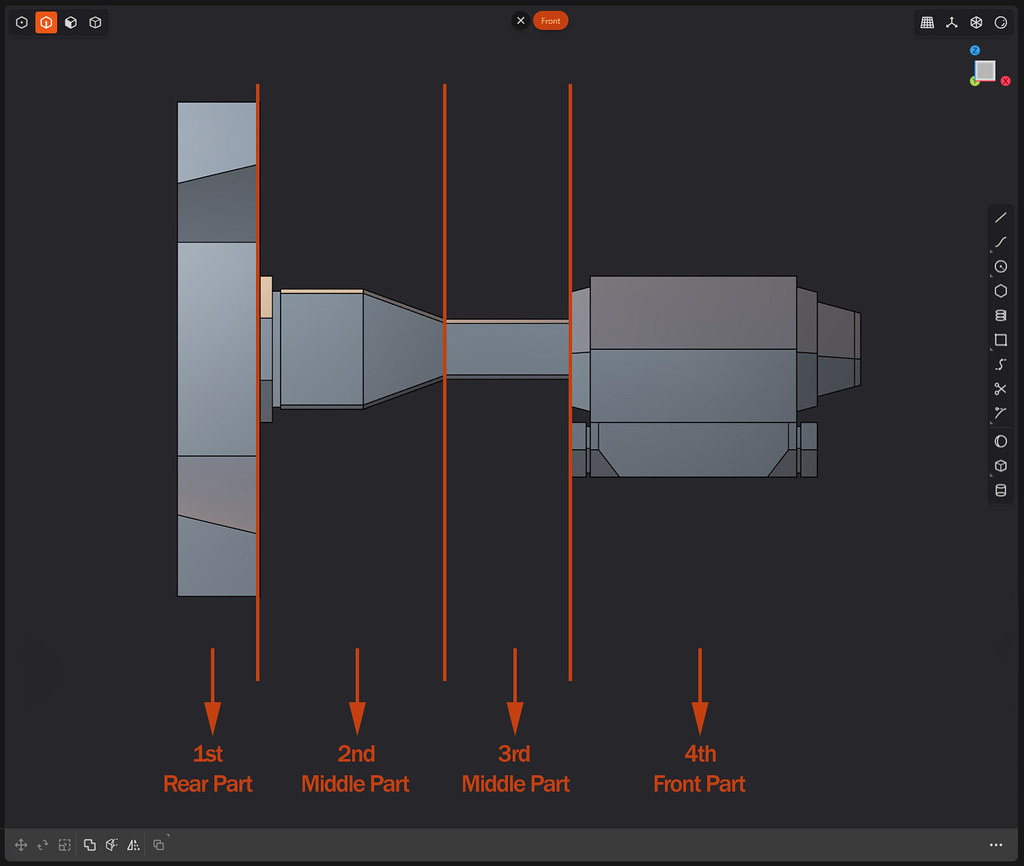
The first stage involved blocking out the main structure in Plasticity. I began with basic primitives, concentrating on proportion and balance while exploring how different mechanical forms could merge into a cohesive silhouette. Plasticity’s NURBS-based modeling tools made it easier to create clean, precise curves and bevels, helping define the Sentinel’s distinct armored character.
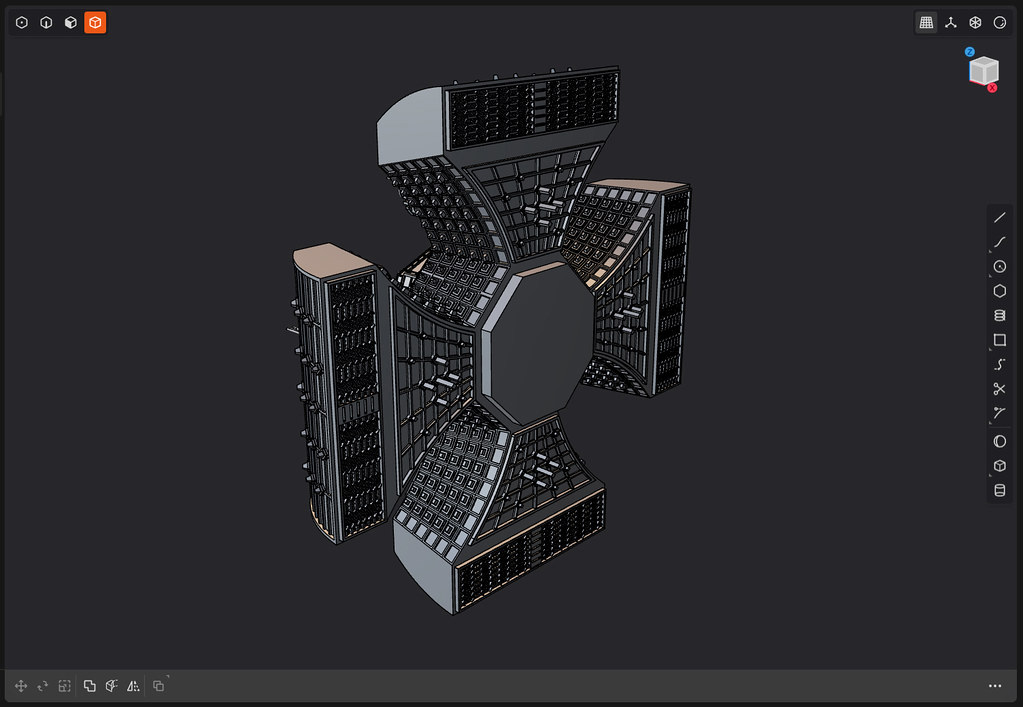
Once the primary structure was established, I refined the rear body, defining where armored plating and reinforcement details would sit. Plasticity’s precise filleting and surface tools made this stage smooth and efficient, allowing me to maintain a balance between functional engineering and ornamental design elements, a hallmark of Imperial aesthetics.
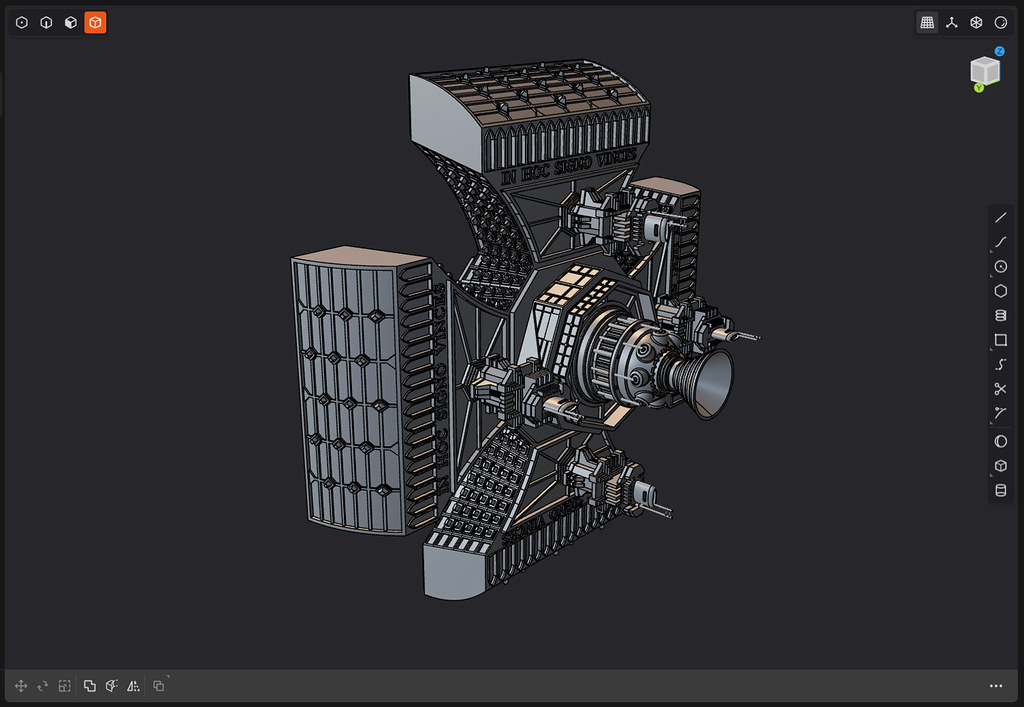
I began integrating smaller mechanical details, giving the design greater depth and realism. These additions included vent systems, weapon mounts, and surface ridges that would serve both functional and aesthetic purposes. In Warhammer’s lore, the Machine Spirit commands reverence, and I wanted every part of the Sentinel to feel engineered yet devotional, as though it had been built with purpose and faith rather than pure efficiency.
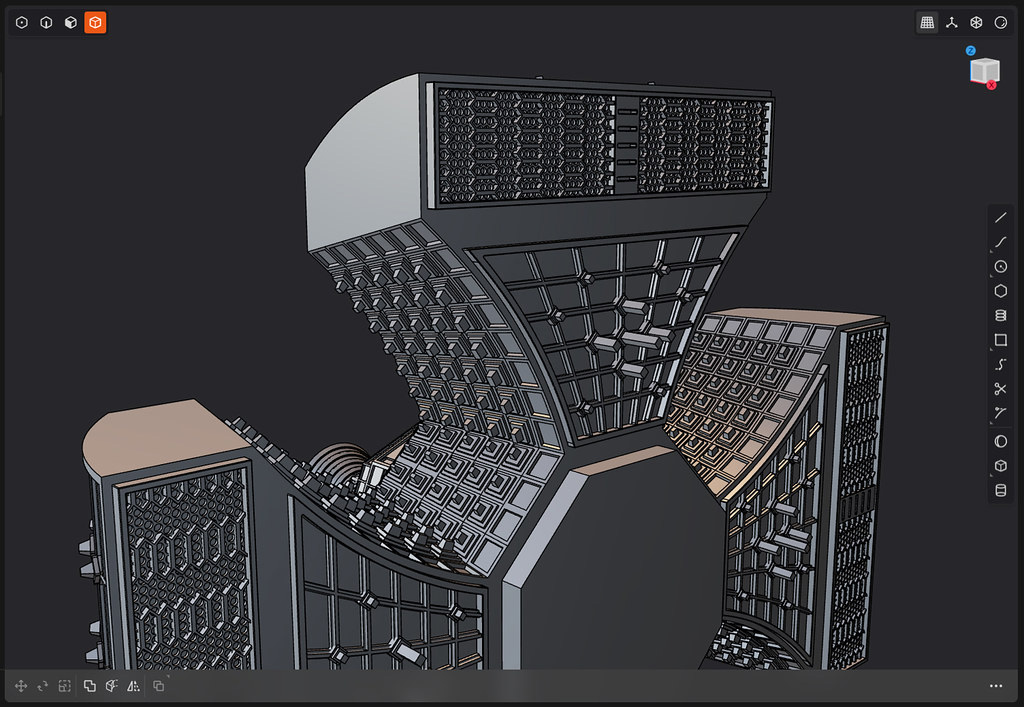
As the geometry became more refined, I focused on panel flow and armor segmentation. Each plate was designed with the idea that it could be serviced or replaced, reinforcing the Sentinel’s role as a long-serving defense construct. Plasticity’s NURBS-based modeling tools made it easier to maintain smooth continuity between surfaces, resulting in a clean and believable manufactured appearance.
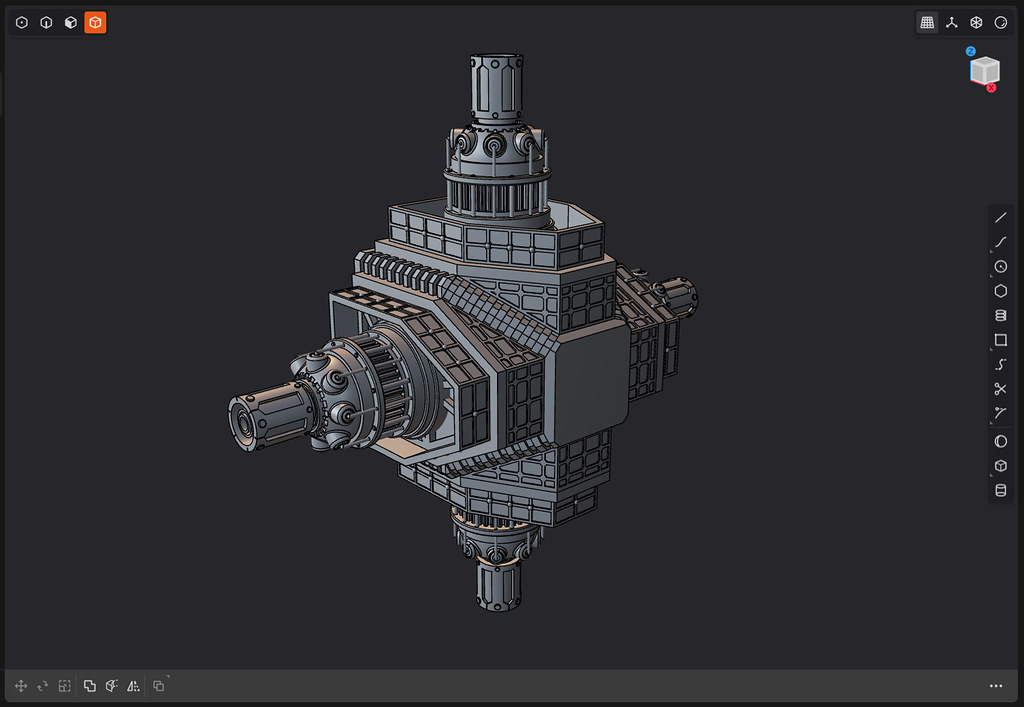
I paid special attention to the central housing structure, which forms the core of the Orbital Sentinel. This section needed to feel monumental, serving both as a functional command center and as a shrine to the Omnissiah. Using precise Boolean operations in Plasticity, I carved recesses and layered volumes to achieve the sacred mechanical symmetry commonly seen in Adeptus Mechanicus architecture.
With the primary structure established, I transitioned to shaping the weapon housings and outer framework. Plasticity’s snapping and edge-continuity features proved essential, allowing me to position large cannons and energy conduits with precision. My goal was to make the weapons appear fully integrated into the machine’s architecture rather than simply attached as separate components.
Next, I refined the engine sections and propulsion details, ensuring they reflected both technical realism and gothic grandeur. These components were designed to appear ancient yet functional, featuring heavy exhaust chambers and mechanical rib structures inspired by cathedral arches. This stage helped capture the unique fusion of science fiction and spirituality that defines the visual identity of Warhammer 40K.
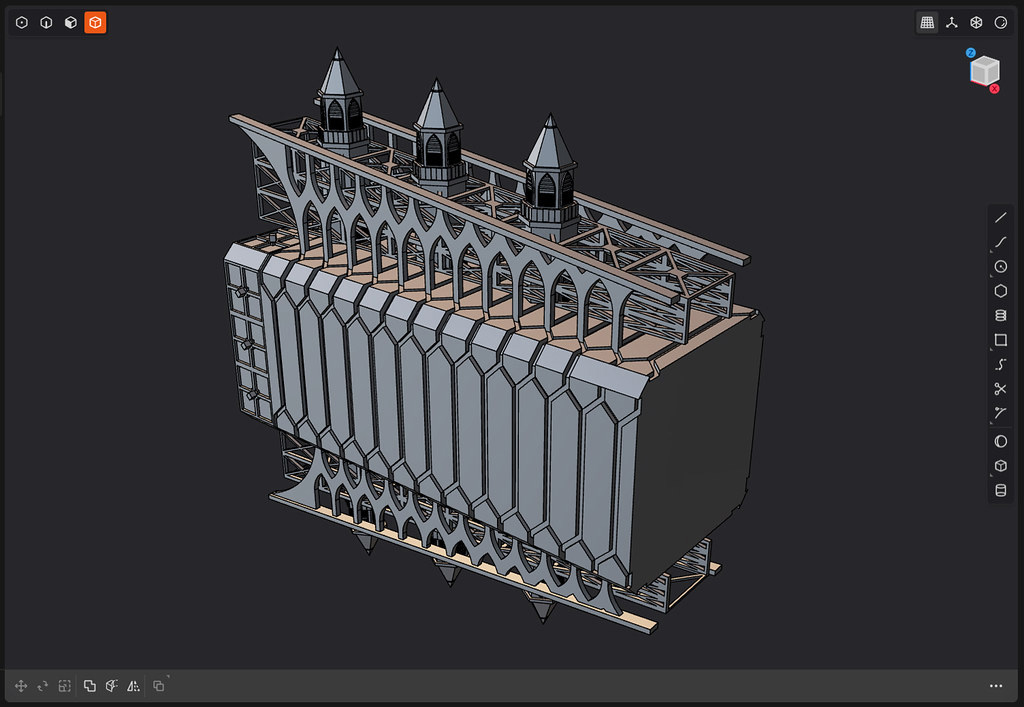
Once the main body and propulsion systems were completed, I shifted my attention to surface detailing. I introduced smaller grooves, bolts, and raised elements to suggest panel joints and structural reinforcement. The objective was to make the Sentinel’s armor appear resilient and battle-tested, capable of enduring millennia of warfare while preserving its ceremonial and sacred presence.
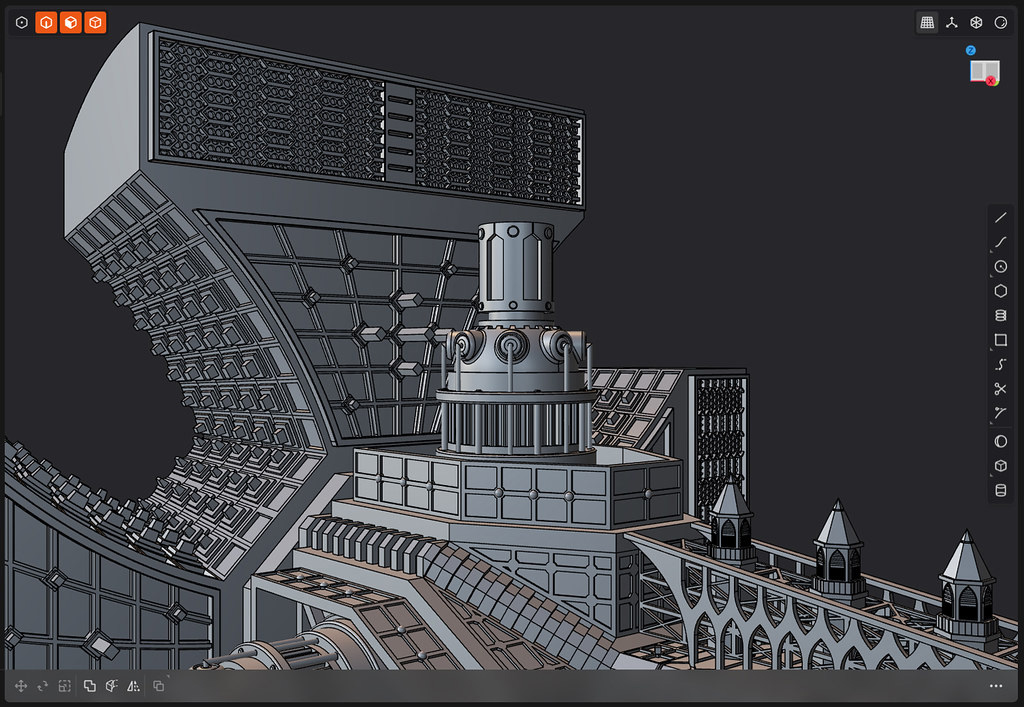
Plasticity made managing complex forms surprisingly fluid. I used its fillet and chamfer tools to round edges where necessary, helping maintain a sense of weight and craftsmanship throughout the design. Unlike polygon modeling, Plasticity’s NURBS-based workflow provided precise curvature control, which proved invaluable when creating hard-surface sci-fi assets with architectural precision.
At this stage, I also refined the proportions and overall balance to ensure the Sentinel appeared stable and imposing. The lower sections were widened slightly to strengthen the sense of grounded mass, while the upper structures remained compact and defensive. This balance of proportions helped reinforce the idea that the Orbital Sentinel functions as both a fortress and a machine.
As the refinement process continued, I experimented with layered armor plating and evaluated how light interacted across the surfaces. Plasticity’s real-time shading feedback proved extremely useful for visualizing curvature transitions and bevels. Every cut, plate break, and surface transition was introduced with purpose, contributing to the overall narrative and visual identity of the model.
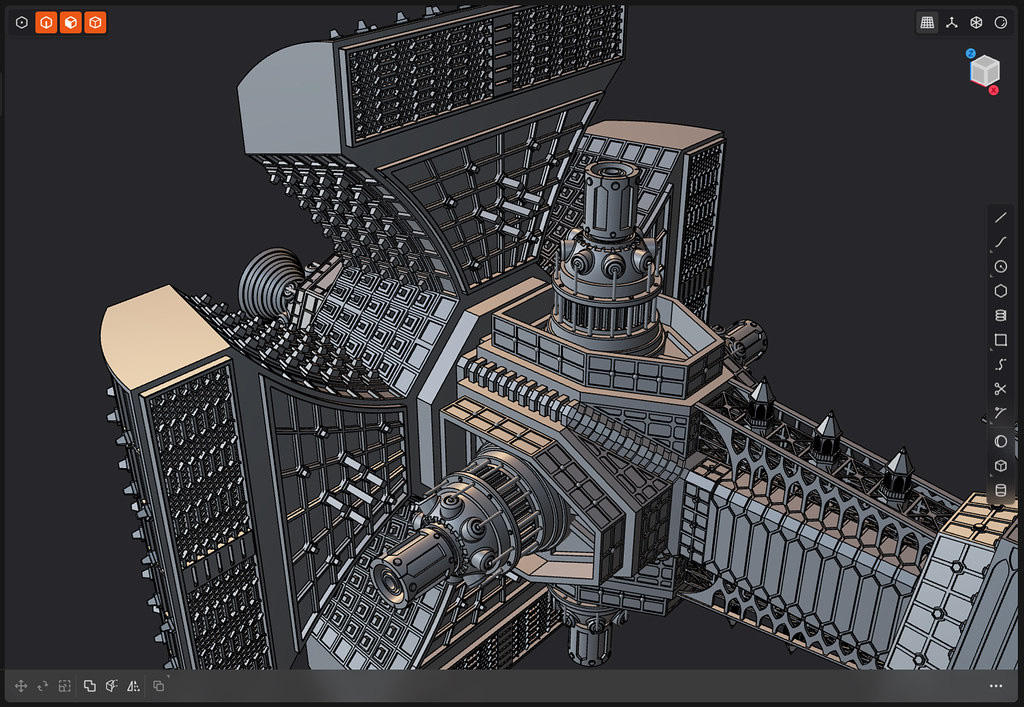
At this stage, I felt the overall silhouette was complete, but I continued adding subtle surface patterns, indentations, and reinforcement structures to enrich the hull. The goal was to give the Sentinel a sense of age and authenticity, as though it had been crafted by the Adeptus Mechanicus and blessed by the Tech-Priests long before entering service.
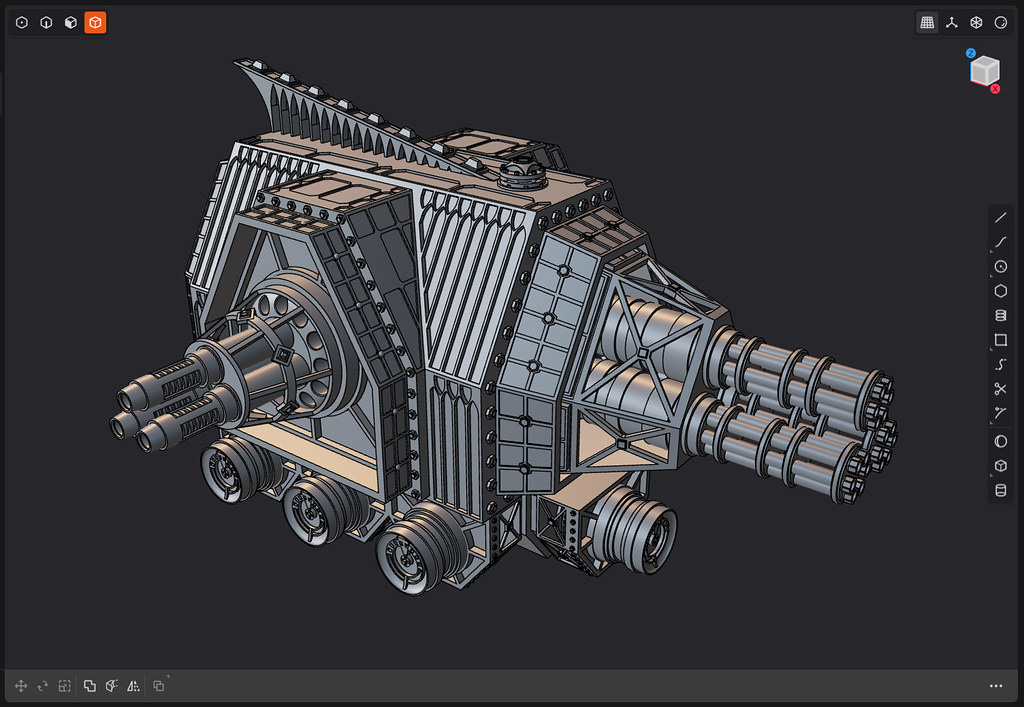
I then focused on the front armor shield and command hull details. The design incorporates layered plating that resembles relic armor and devotional shields, serving both as protection and as a symbolic barrier between the machine’s core and the void. Each addition reinforced an important theme within Warhammer 40K, where machinery is often treated with the same reverence as a sacred artifact.
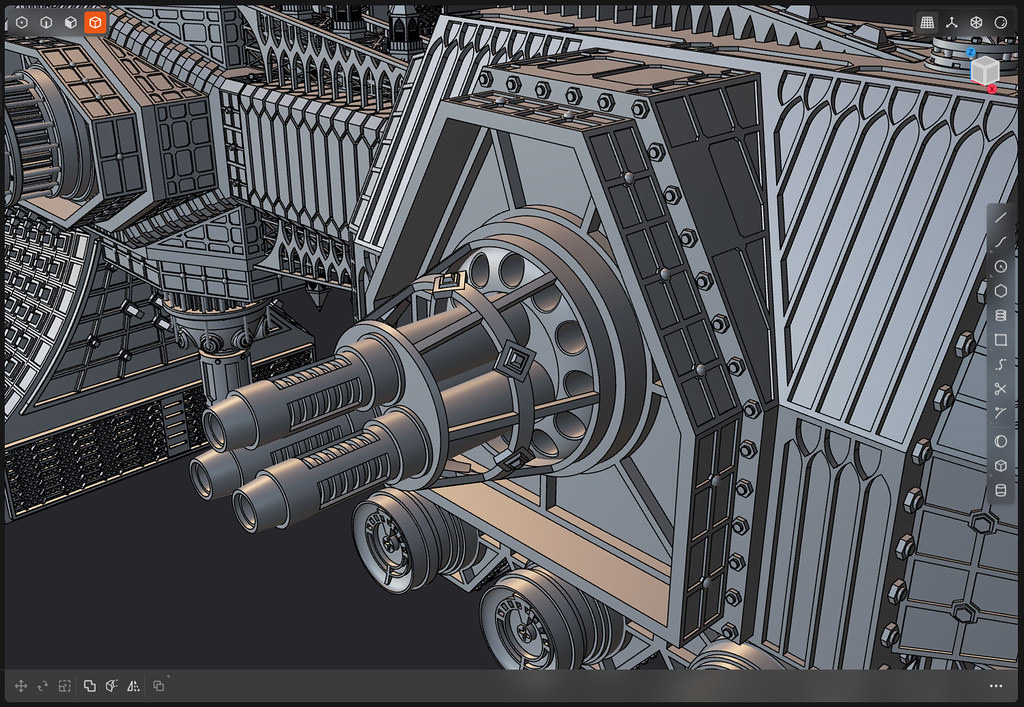
The final modeling stage in Plasticity focused on fine mechanical joints, structural refinement, and alignment checks. This phase was centered on precision, ensuring the model was watertight, symmetrical, and ready for export. Plasticity’s flexibility made it easy to inspect every curve and junction. Once the geometry was finalized, I prepared the model for UV unwrapping and material development in 3ds Max.
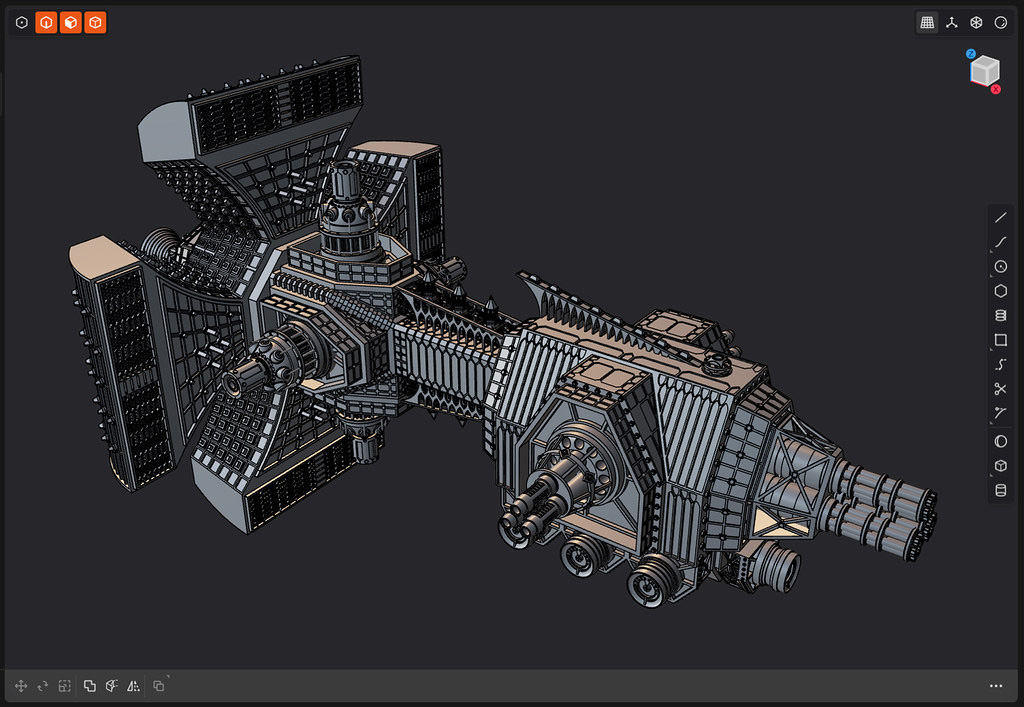
The first view, a perspective angle, captures the Orbital Sentinel in all its imposing detail. From this viewpoint, the vessel’s towering silhouette and layered armor emphasize its monumental scale. The lighting highlights the subtle curvature of its surfaces, with every bevel, ridge, and armor plate working together to convey a sense of mechanical reverence. This view best represents the Sentinel’s role within the Warhammer 40K universe, an orbital fortress designed not only to defend but also to inspire awe and command respect.
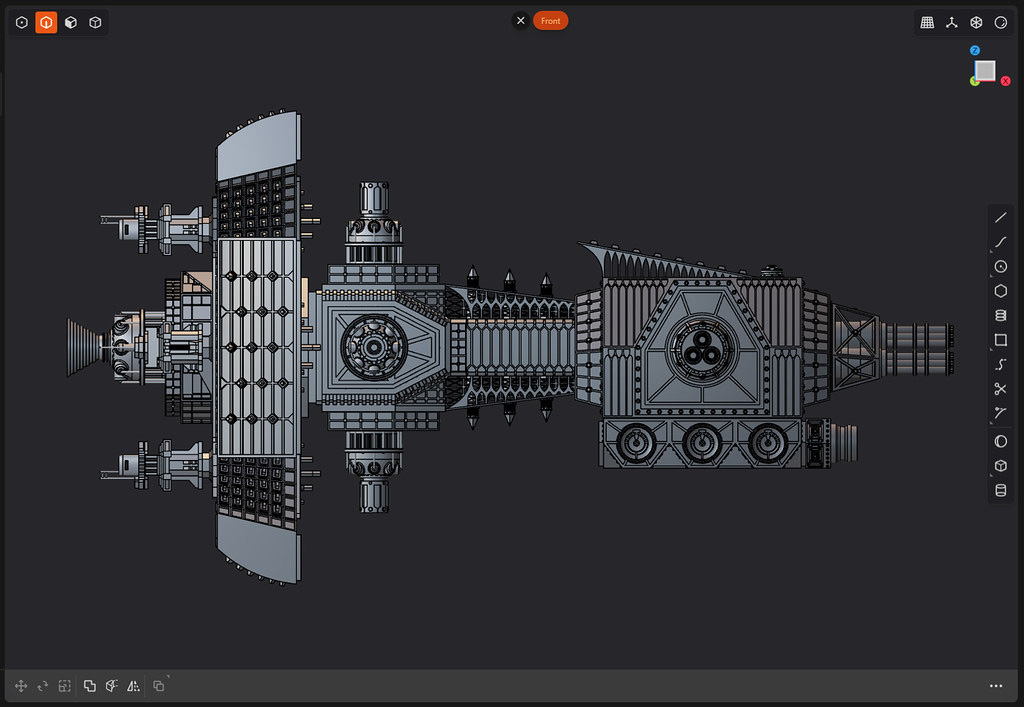
The second view presents a precise side profile, highlighting the Sentinel’s structural integrity and overall balance. From this angle, the disciplined flow of the design becomes clearly visible, revealing the relationship between the hull, weapon housings, and supporting structures. This perspective was particularly valuable during the modeling process, helping ensure that the Sentinel’s engineering logic remained believable and cohesive, as if it were a real construct built by the Adeptus Mechanicus.
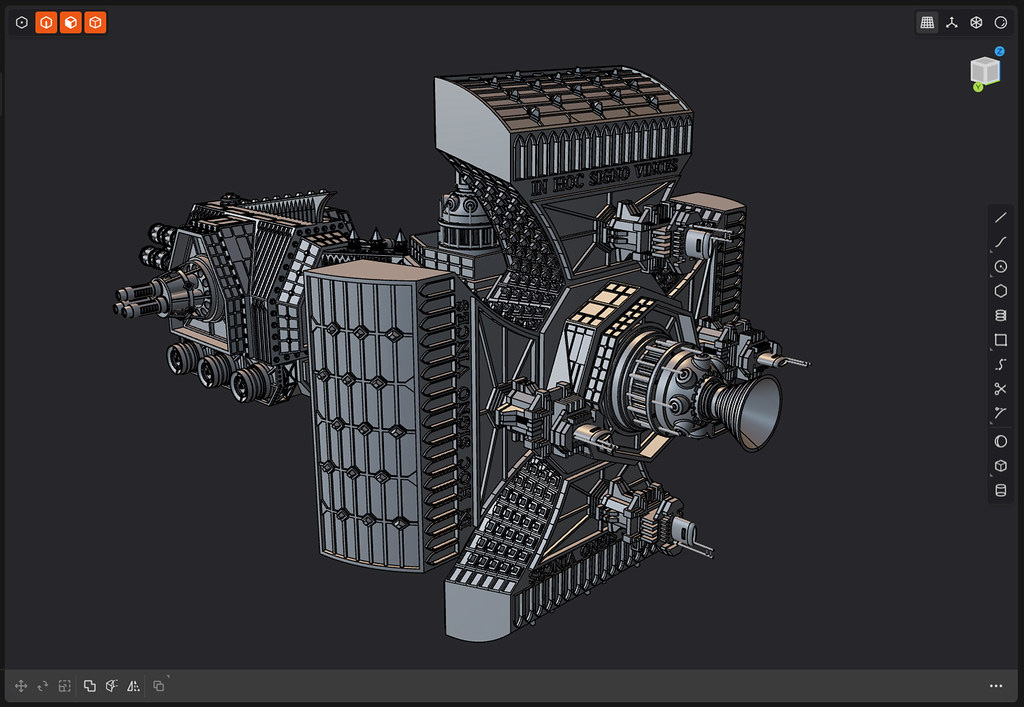
The final view, a rear perspective, reveals the powerful thruster arrays and intricate machinery that define the Sentinel’s propulsion system. Layered exhaust housings, ribbed mechanical joints, and reinforced structural elements convey the raw power of a vessel designed to endure centuries of service. From this angle, the Orbital Sentinel appears almost alive, embodying the machine spirit that silently watches over the Emperor’s domain.
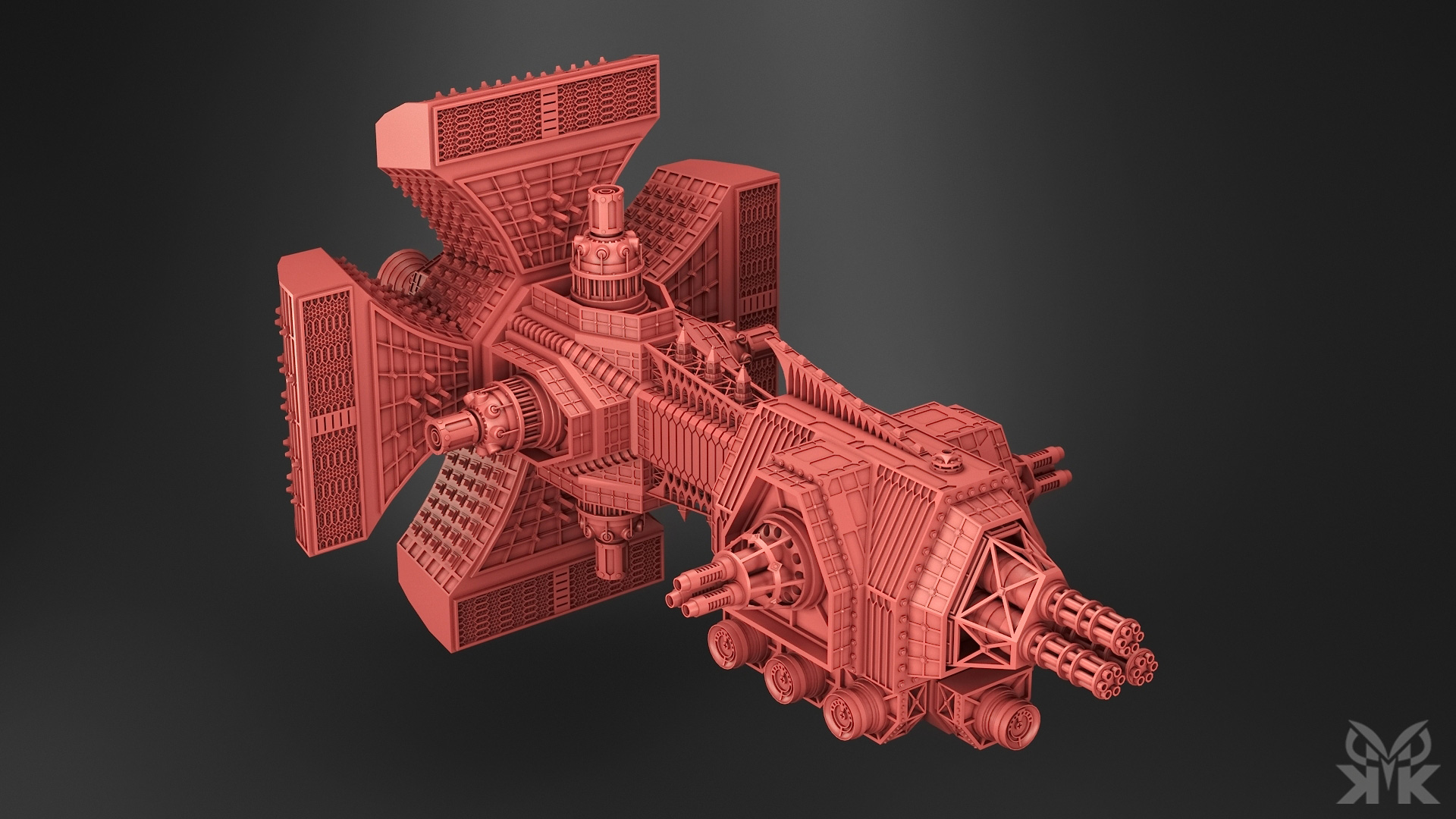
To evaluate the effectiveness of the UV layout, I generated several clay renders of the unwrapped model from different viewing angles. These previews allowed me to inspect seam placement, island distribution, and overall surface coverage before moving on to the texturing stage. Viewing the Sentinel in its unwrapped state also revealed the complexity of the asset, highlighting the large number of individual components that required careful organization and optimization.
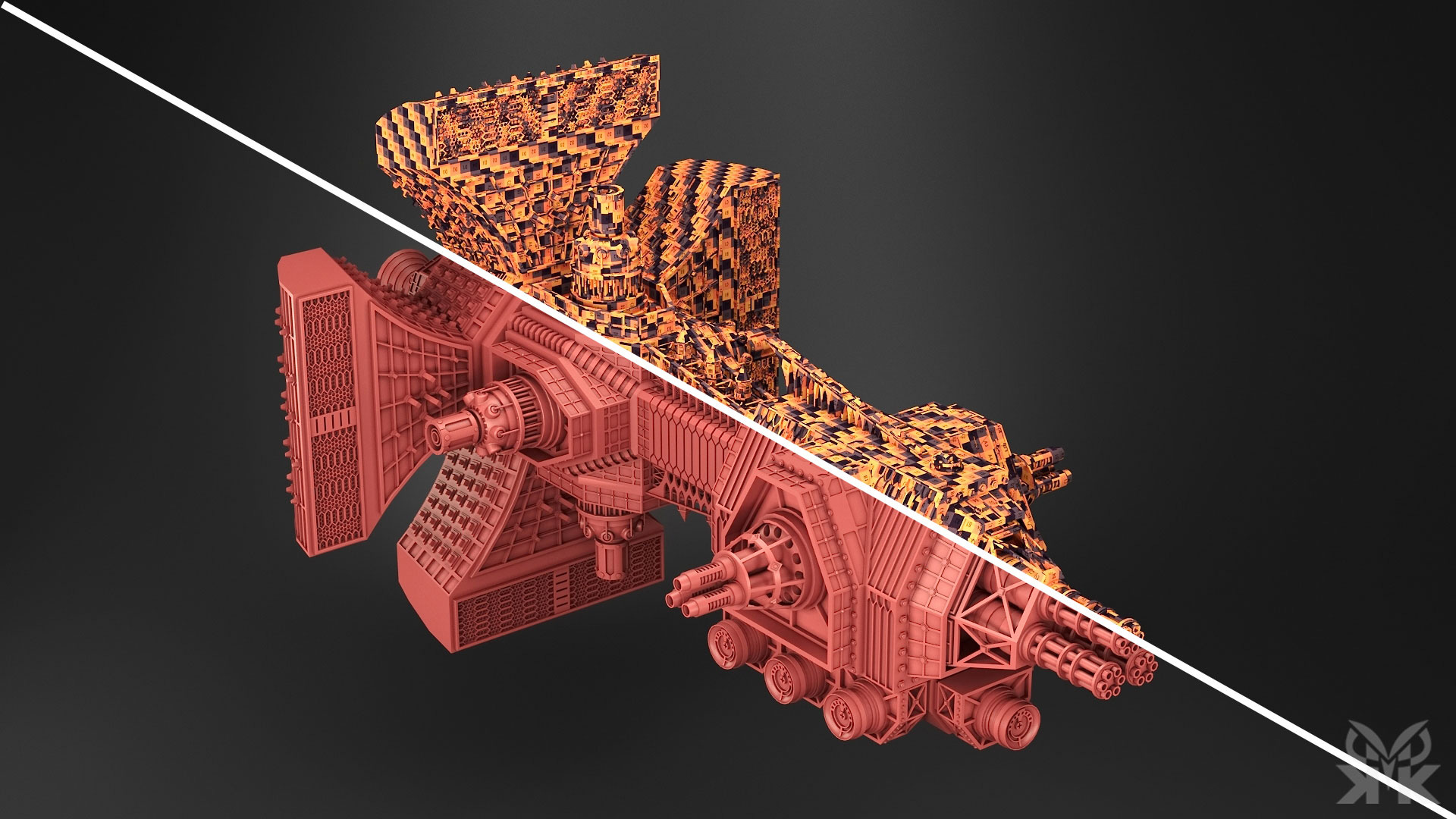
With the model exported into 3ds Max, I began the UV unwrapping process. Although often overlooked, this stage is essential for achieving professional-quality texturing. I divided the model into logical UV groups, carefully preserving symmetry and maintaining consistent texture density. Clean UVs provide a strong foundation for material creation, particularly for hard-surface and metallic assets.
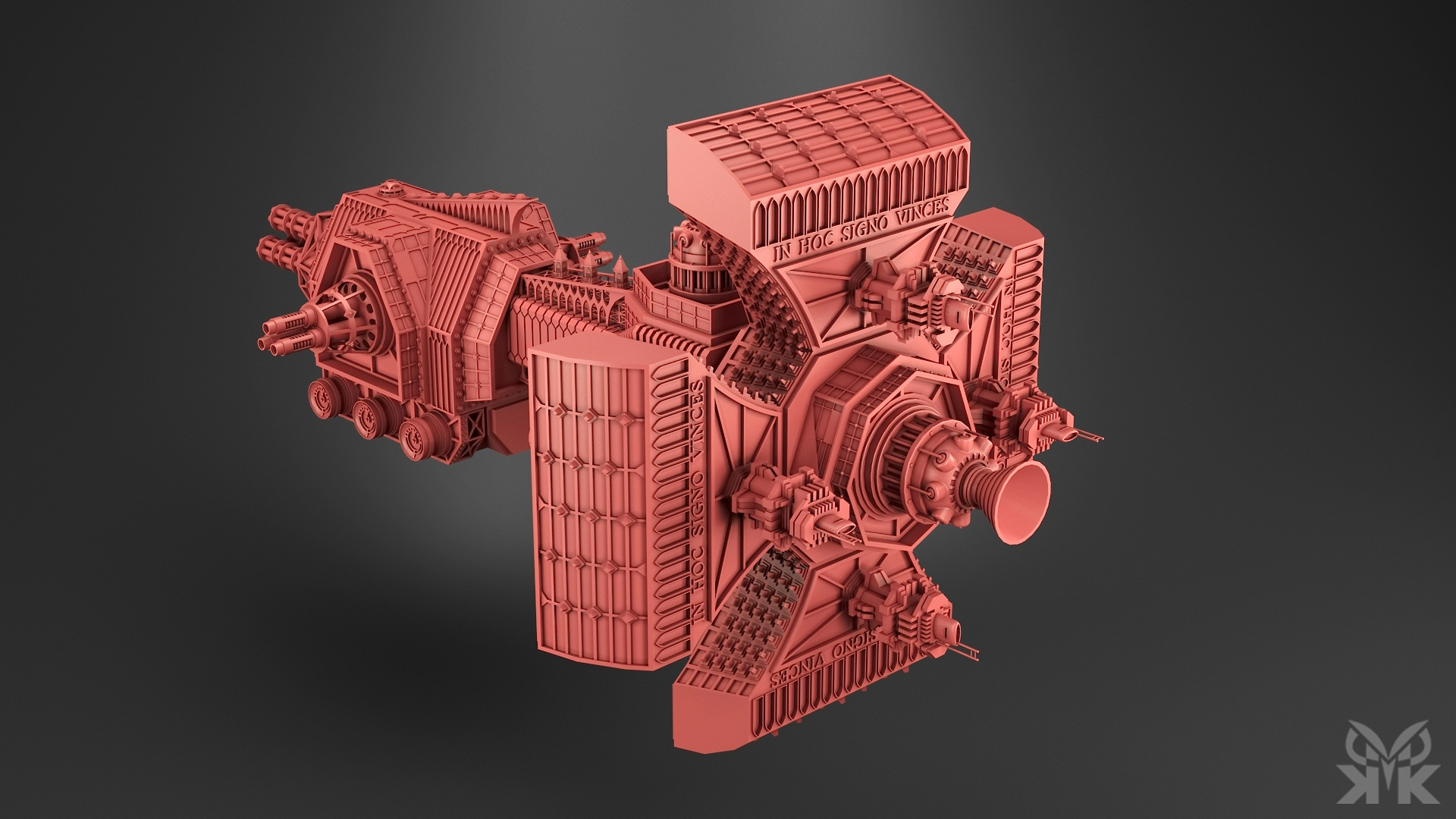
Examining the model from multiple perspectives helped verify that the UV layout remained consistent across the entire structure. Large armor panels, weapon assemblies, propulsion systems, and architectural details all maintained balanced texel density and clean UV distribution. This validation stage was essential for ensuring that future materials would behave predictably and that the final textured model would preserve the same level of detail visible during the modeling process.
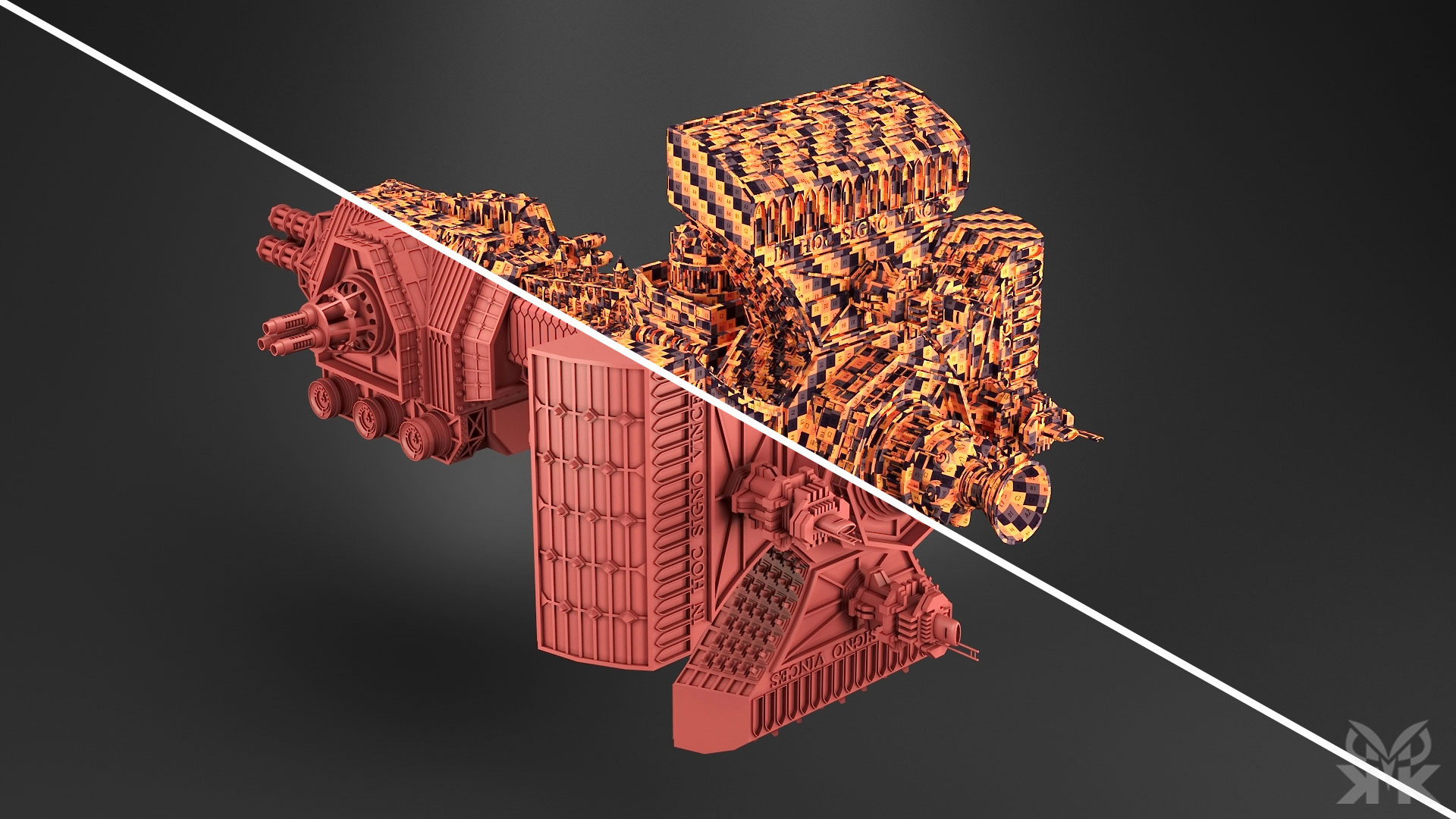
Finally, I produced a test unwrap render to verify UV coverage and scaling across the entire model. The unwrapped view demonstrated that every surface had been mapped correctly and was ready for future material development. This milestone marked the completion of the technical phase of the project and established a solid foundation for the texturing and rendering stages that will ultimately bring the Orbital Sentinel to life.
Related Keywords
Black Templars, Automated Orbital Sentinel, Warhammer 40K, Hard Surface Modeling, Plasticity 3D, Autodesk 3ds Max, Sci-Fi Vehicle Design, Imperial Architecture, Mechanical Design, Science Fiction Asset, Game Asset Development, UV Unwrapping, Industrial Design, Futuristic Machinery, CG Modeling, 3D Visualization, Surface Detailing, Concept Development, Asset Creation, Digital Sculpting, Environment Design, Mechanical Engineering, Vehicle Construction, Science Fiction Worldbuilding, Imperial Technology, 3D Art
No Comments