
Making of Warhammer Locomotive
This project began as a personal challenge inspired by the gritty and mechanical aesthetics of the Warhammer 40K universe. Before modeling, I collected numerous reference images from different sources online, studying the proportions, weathering details, and industrial design language typical of the Warhammer world. My goal was to recreate a locomotive that fits seamlessly within that universe — both believable and heavily stylized. The modeling was done in 3ds Max, while the railroad and environment were created in Autodesk Inventor and detailed with Corona Scatter. The entire scene was rendered using the Corona Renderer to achieve realistic lighting and materials.
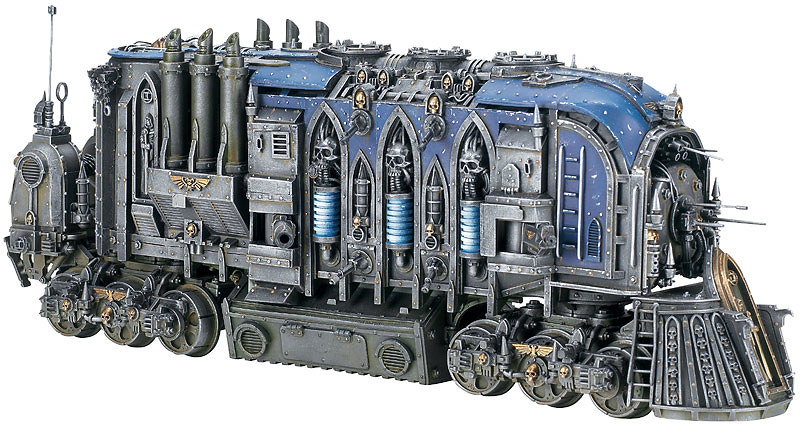
In the first stage, I gathered visual references of locomotives and Warhammer 40K vehicles. These helped me understand the proportions, armor details, and overall silhouette. I compared these references from several angles to ensure my model captured the authentic grimdark feel of the Warhammer universe.
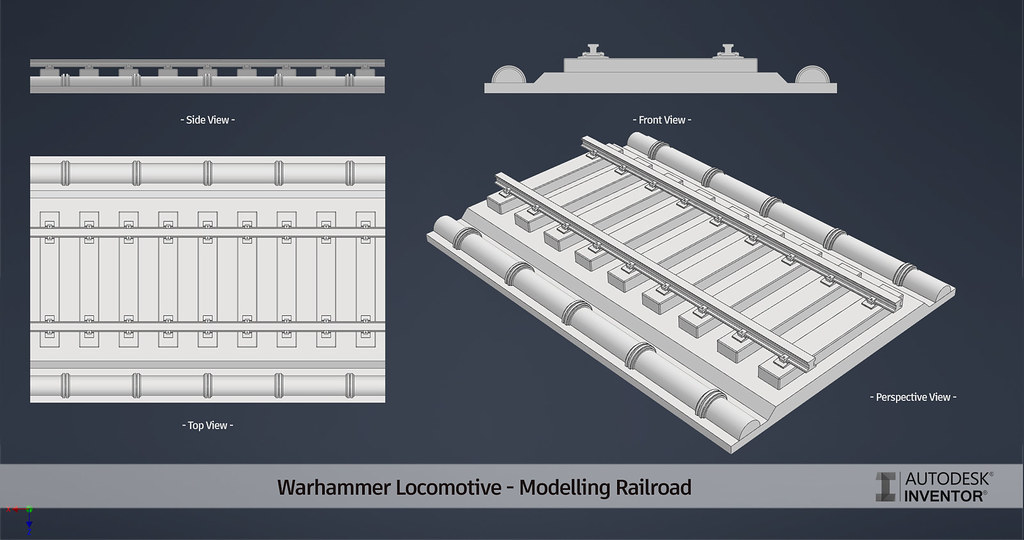
The track and rail base were modeled in Autodesk Inventor for dimensional accuracy. Inventor let me create exact-sized rails, ties, and fastenings that would later align perfectly with the locomotive in 3ds Max.

Before scattering, I created about ten low-poly stone variations to feed into Corona Scatter. Small variations reduce repetition and make the ballast appear naturally random at render scale.

This image shows the ballast distribution done with Corona Scatter. The scatter system efficiently places the low-poly stones, giving the track believable weight and micro-detail without huge geometry cost.
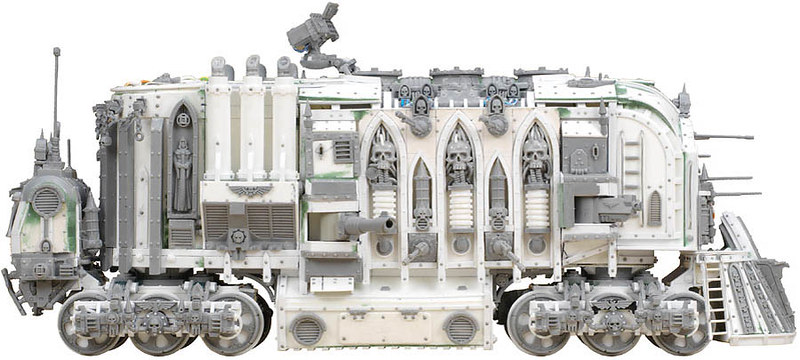
A side-view reference photograph used for direct comparison to my model. I continuously referenced these photos to make sure panels, vents, and the overall profile matched the Warhammer-industrial language.

The clay side render confirms that the silhouette, fender lines, and side armor composition read correctly from a distance — a crucial check before committing to high-frequency detailing.
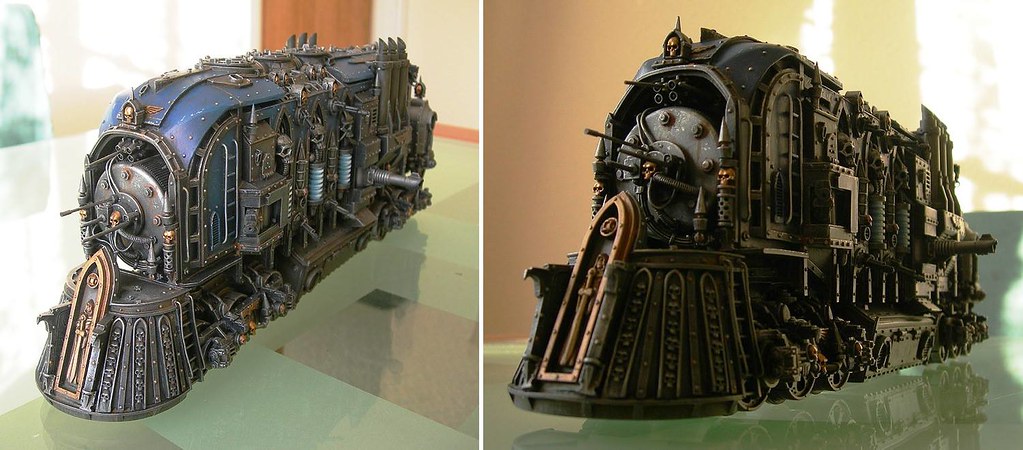
Multiple-angle reference images helped when modeling complex areas like the front nose and rear mechanical housings. I compared the model to these images frequently to maintain consistent perspective across views.
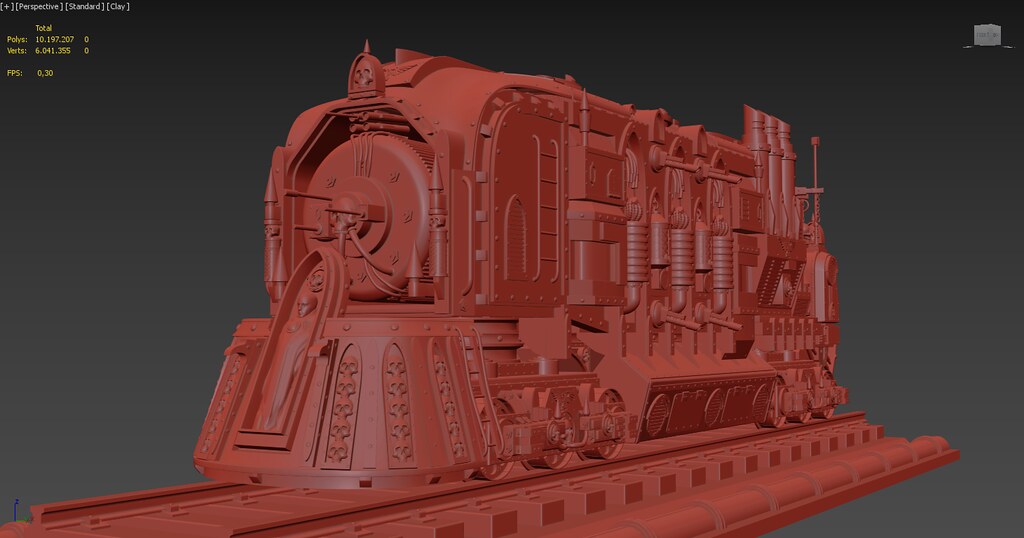
These viewport captures show the model rotated to several camera angles. Reviewing the object from different viewpoints identified areas where geometry pinched or where panel transitions needed smoothing.

A top-view photo provided cues for roof-mounted hardware and the engine canopy layout. The top-view clay render verifies placement for exhausts, vents, and ornamental cresting so they don’t conflict visually.

This top-view clay capture shows component spacing, walkway clearances, and grill placement. It’s where I finalize the path of service panels and mechanical access ports before texturing.
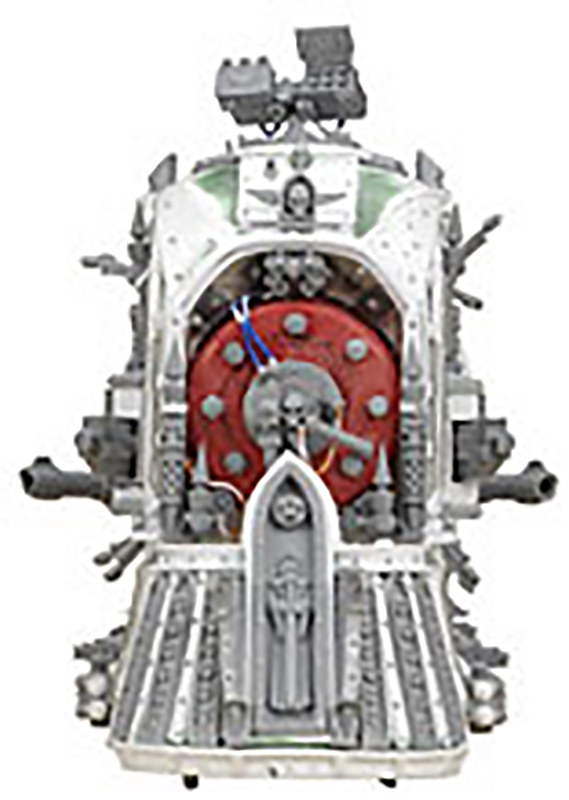
The front-view reference and the matching clay viewport emphasize the locomotive’s facial composition ; the prow, grill work, and frontal armor. Getting this right sells the machine’s personality and intimidation factor.

I compared my 3D model with the real-world and Warhammer references I collected earlier. This ensured that proportions, scale, and surface composition aligned closely with the aesthetic foundations of the source material.
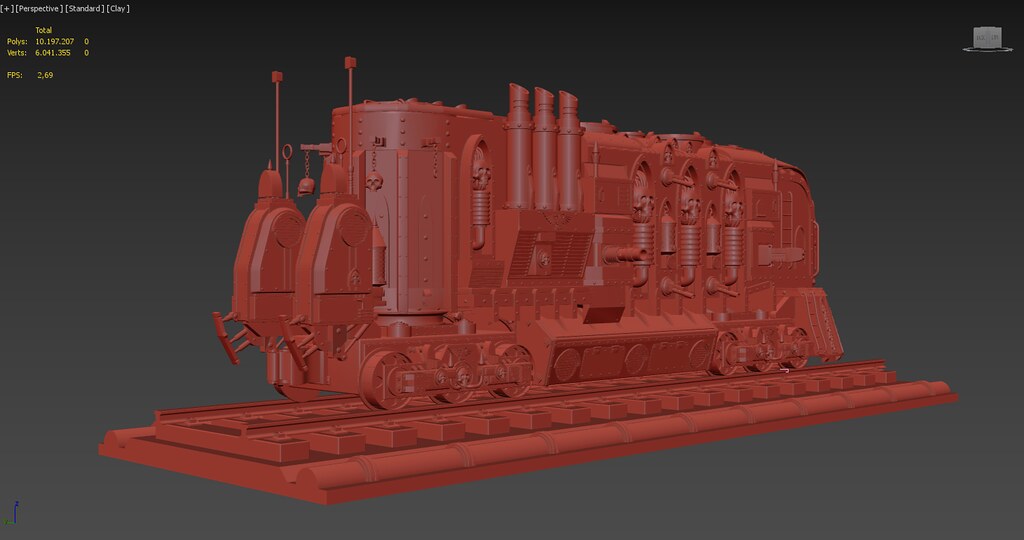
Rear and underside viewport screenshots document coupling hardware, exhaust routing, and wheel well geometry. These mechanical details are modeled to appear functional and to support believable wear in final renders.
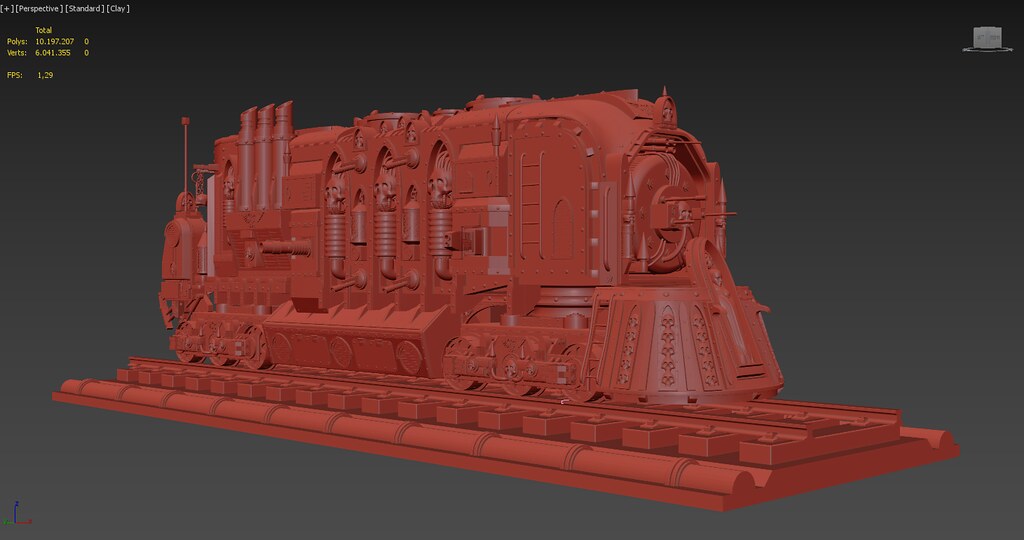
After all elements were modeled and textured, I assembled the entire scene, aligning the locomotive with the prepared tracks and environment. Proper lighting setup in Corona brought cohesion and dramatic contrast.

The final render showcases the completed Warhammer 40K locomotive model in its full glory. The detailed surfaces, lighting, and environment combine to evoke the feeling of an Imperial war machine roaring across a desolate battlefield.
This project was both a technical and artistic exploration. From research and modeling to environment creation and rendering, every stage contributed to a cohesive and believable piece inspired by the Warhammer 40K universe. Working with 3ds Max, Inventor, and Corona Renderer provided the control and realism I needed to bring this grim industrial locomotive to life.
No Comments