
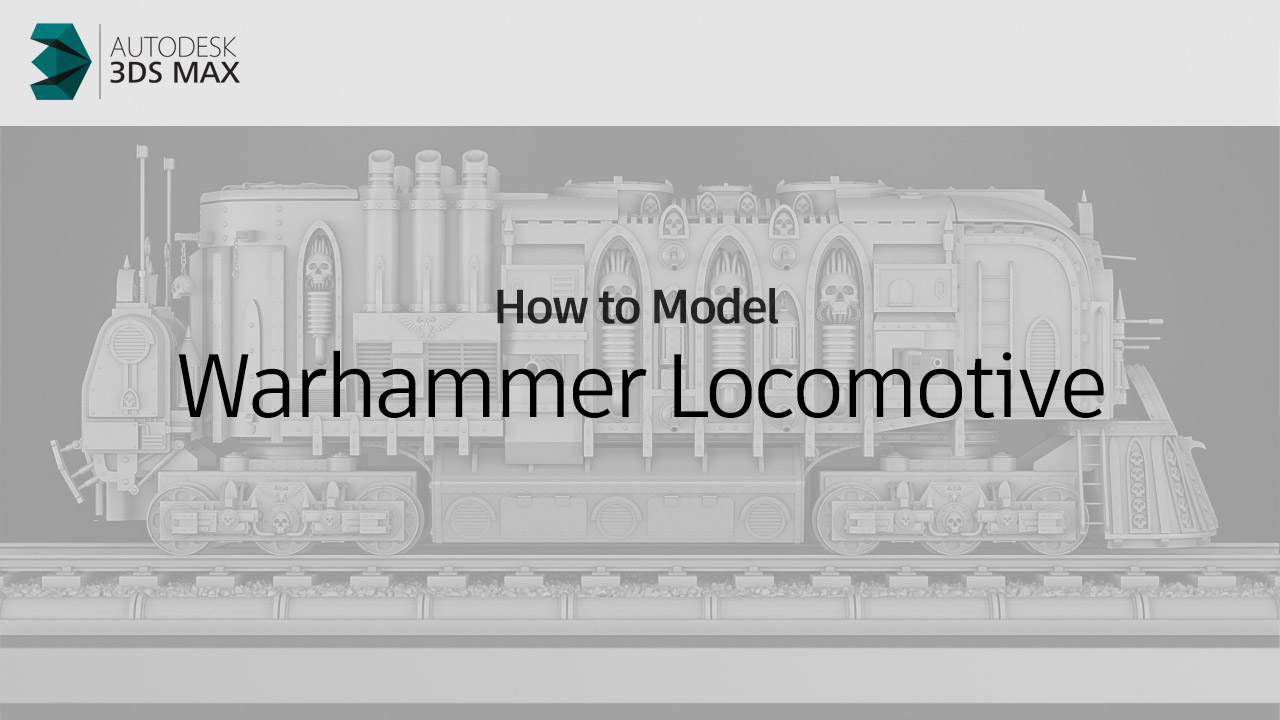
Making of Warhammer Locomotive
Designed in: Autodesk 3ds Max | Environment Developed in: Autodesk Inventor | Rendered with: Corona Renderer | Project Type: Warhammer 40K Vehicle & Environment Study
This Warhammer 40K Locomotive project began as an exploration of how industrial engineering and gothic architecture could be combined into a single vehicle design. Inspired by the imposing machinery of the Imperium, the goal was to create a locomotive that felt functional, heavily armored, and deeply rooted in the visual language of Warhammer 40K. The project involved vehicle modeling, environment development, procedural detailing, and final rendering, resulting in a complete scene that captures the scale and atmosphere of the setting.
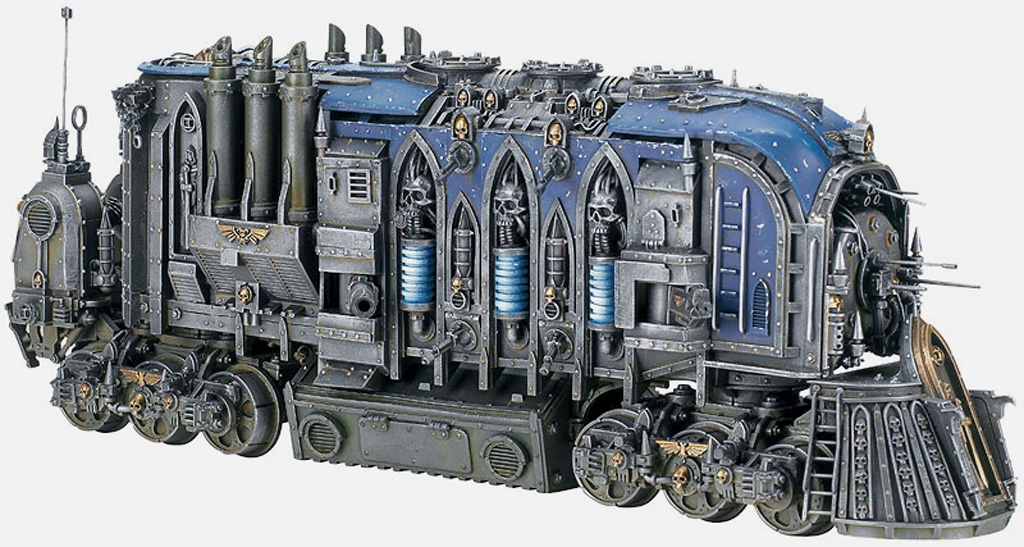
The initial research phase focused on collecting visual references from Warhammer vehicles, industrial locomotives, military machinery, and gothic architectural structures. Understanding how these influences could be combined helped establish the proportions, detailing style, and overall character of the locomotive before any modeling work began.
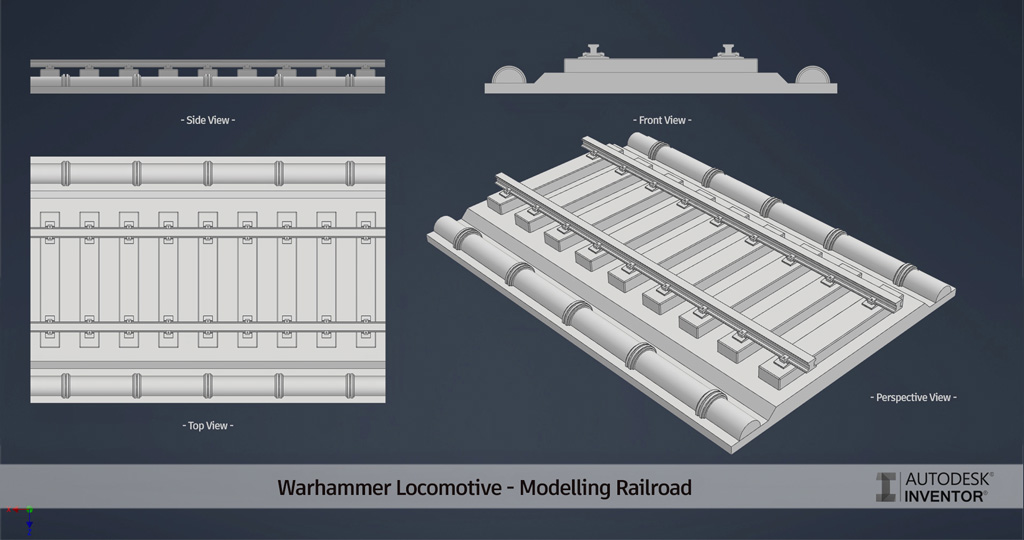
Before developing the vehicle itself, I created a dedicated railway system that would serve as the foundation of the scene. Building the tracks in Autodesk Inventor allowed every rail, sleeper, and support element to be modeled with precise dimensions, ensuring the locomotive would integrate naturally into its environment.
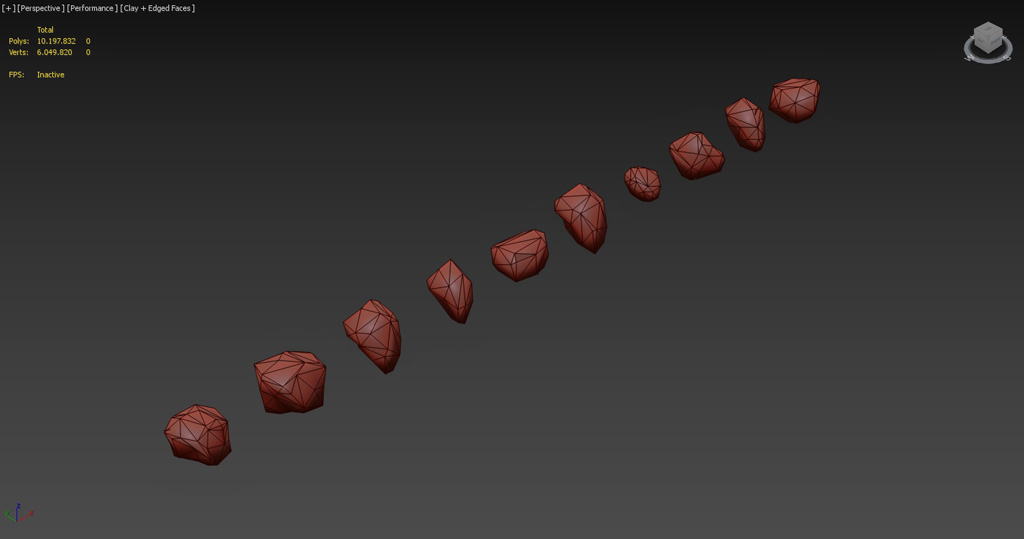
To avoid repetitive surface patterns across the railway bed, I created multiple low-poly stone variations that could later be distributed procedurally. These assets formed the basis of the ballast system and provided the visual irregularity needed to make the track feel grounded and believable.
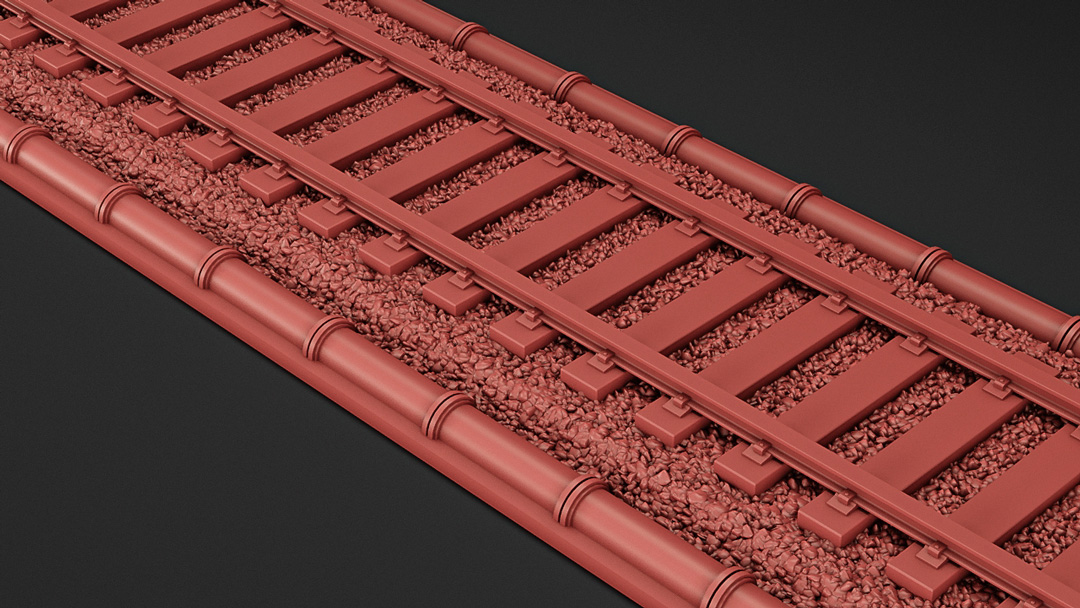
Using Corona Scatter, the individual stone assets were distributed across the railway structure to create a dense layer of ballast. This approach added significant visual richness while maintaining an efficient workflow and manageable scene complexity.
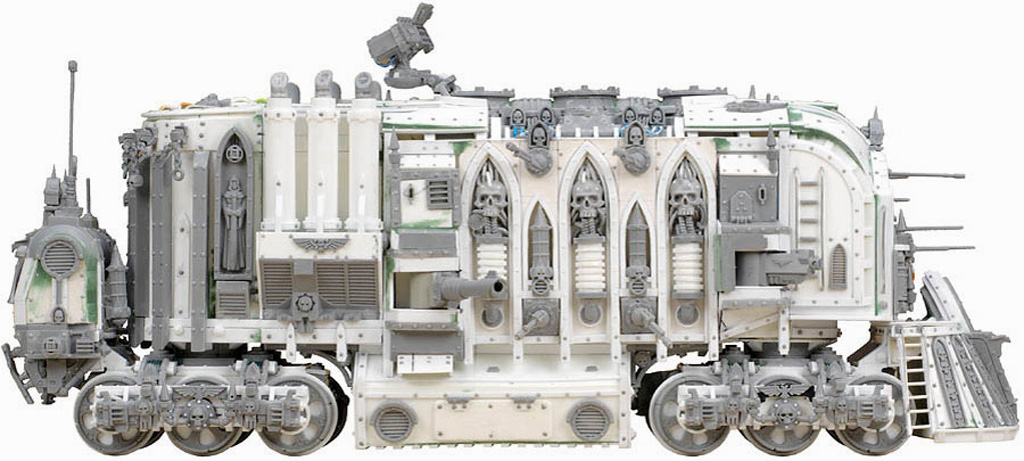
Side-profile references became one of the most valuable tools during development. Constant comparison against source imagery helped maintain the correct proportions and ensured that the locomotive preserved the heavy industrial presence associated with Imperial war machines.
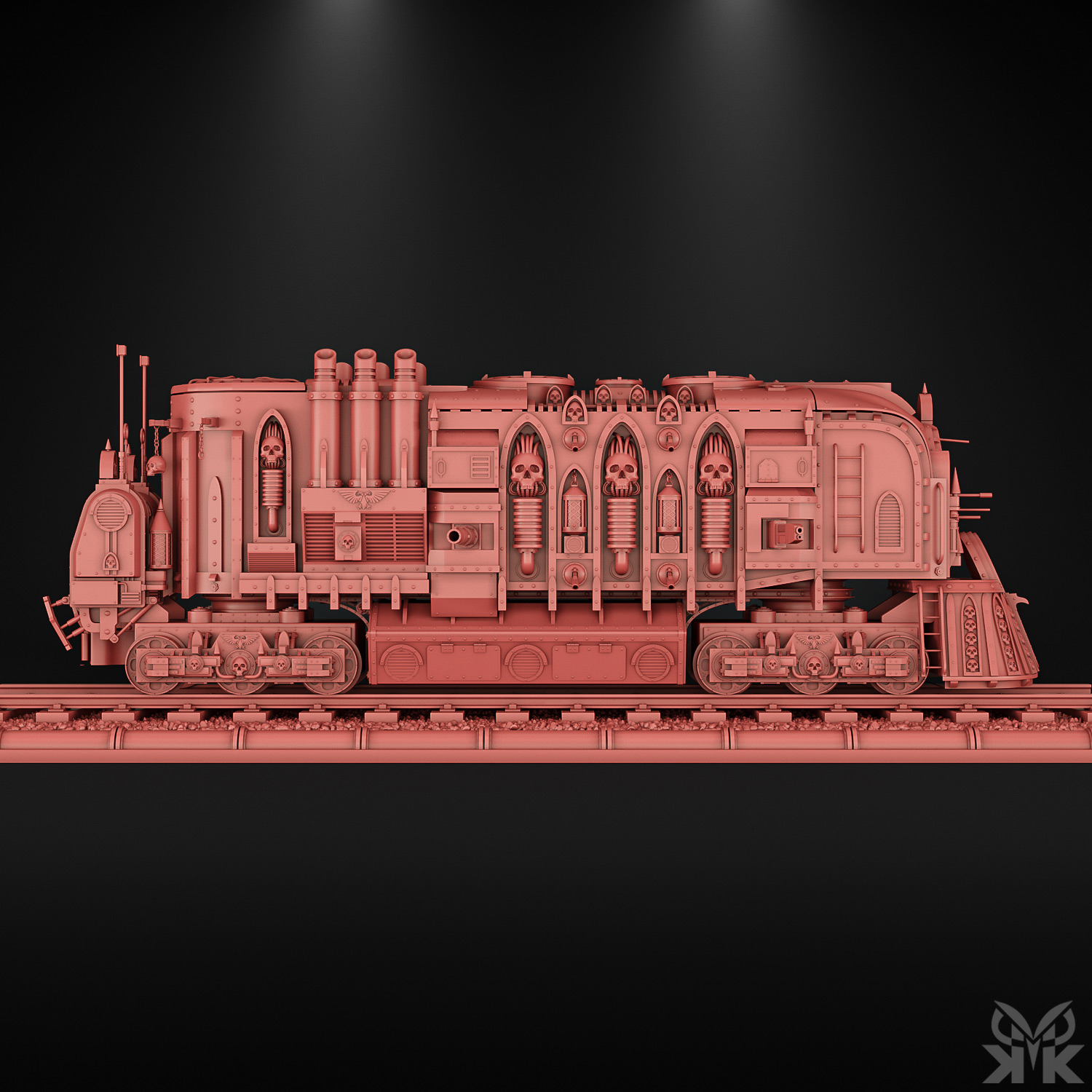
Once the primary forms were established, I generated clay renders to evaluate the silhouette independently from materials and textures. This stage allowed me to focus entirely on proportion, balance, and visual readability before committing to secondary and tertiary details.
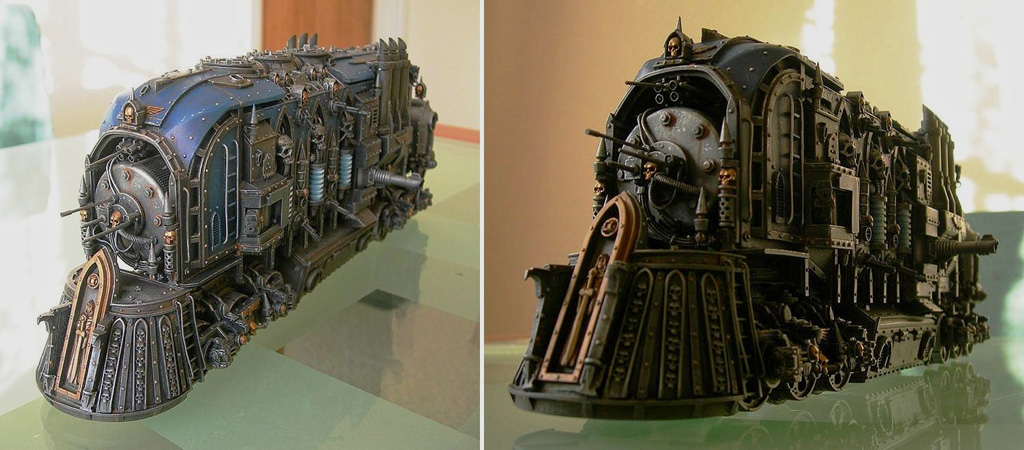
Additional reference material was gathered for the front and rear sections of the locomotive. These views revealed construction details that were difficult to interpret from side photographs alone and helped improve the consistency of the design across all viewing angles.
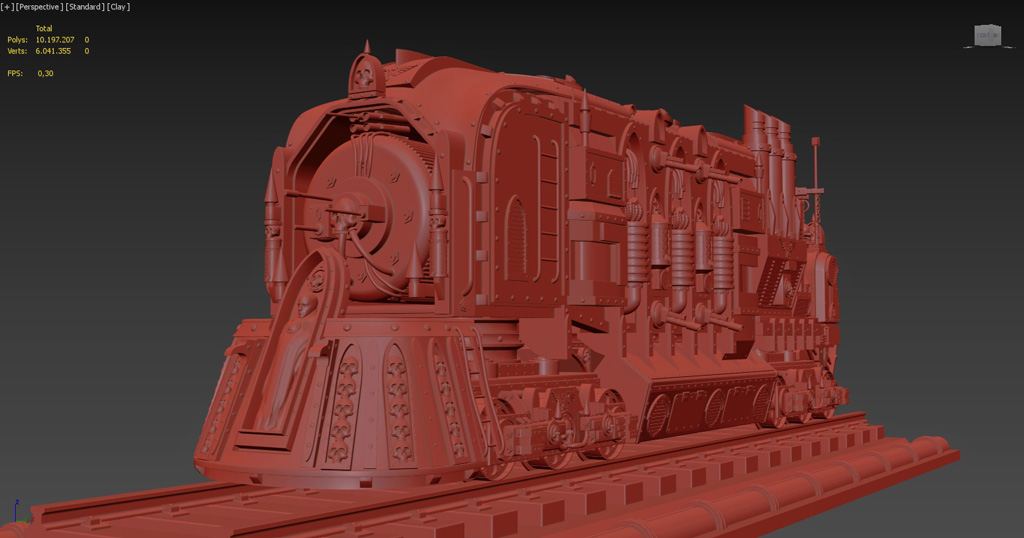
Reviewing the locomotive from multiple camera positions exposed areas that required refinement. Rotating the model throughout development helped identify surface inconsistencies, improve transitions between components, and strengthen the overall visual flow of the design.
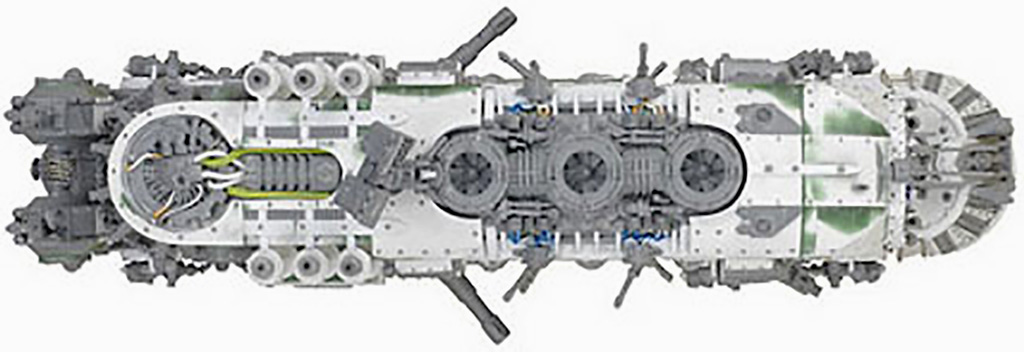
The roof section introduced another layer of complexity, requiring careful placement of exhaust systems, maintenance walkways, and mechanical equipment. A top-down development pass helped organize these elements into a layout that remained functional while supporting the vehicle’s distinctive silhouette.
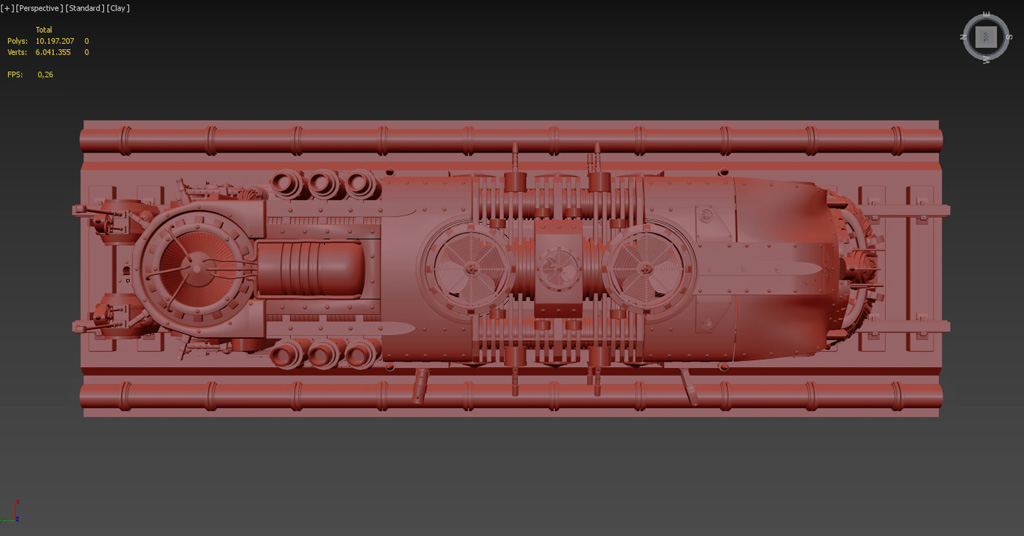
Top-view clay renders became an important validation tool during the detailing phase. They provided a clear overview of spacing, access routes, and component relationships, helping ensure that every feature contributed to the design without creating unnecessary visual clutter.
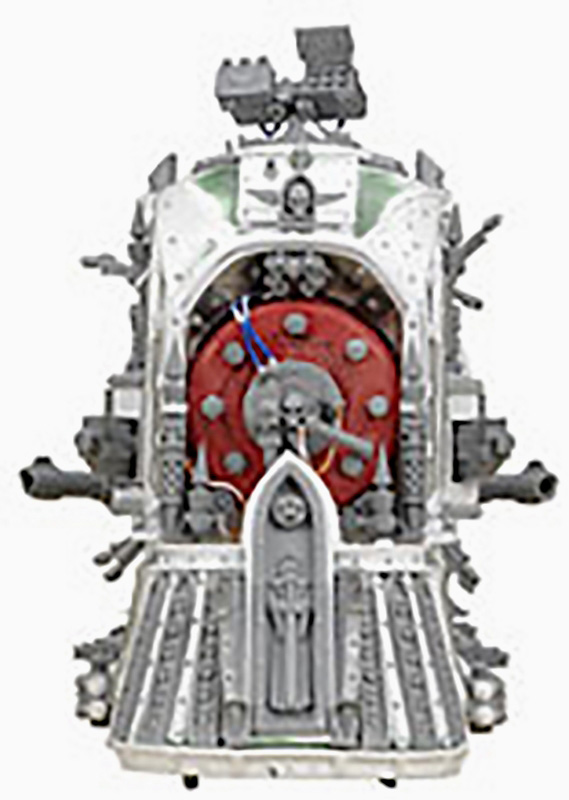
The front section received special attention because it effectively serves as the face of the locomotive. Armor plates, decorative crests, mechanical details, and the reinforced prow were all arranged to create a powerful focal point that reflected the intimidating presence expected from a Warhammer 40K vehicle.
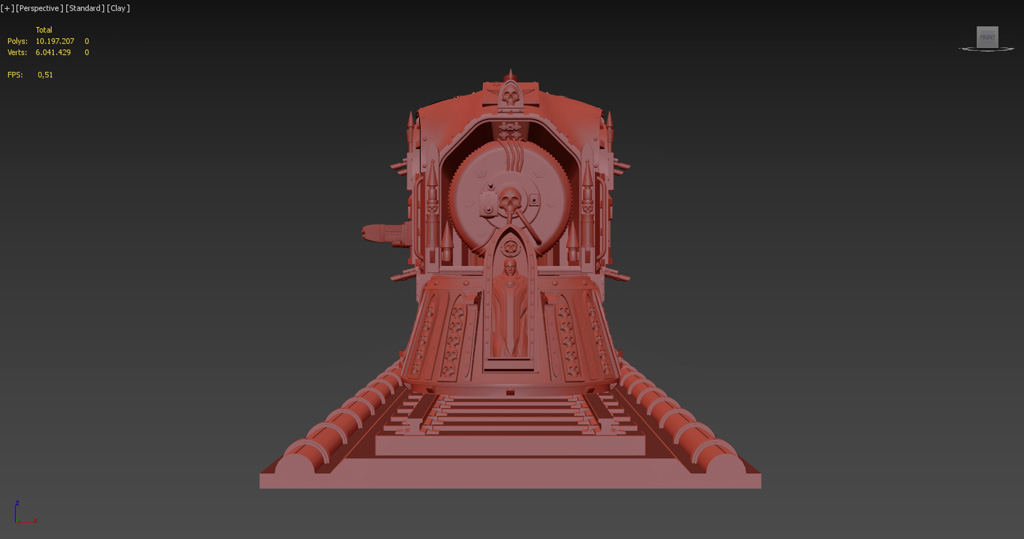
Front-view clay renders allowed the composition to be evaluated in its simplest form. By removing materials and lighting, it became easier to judge symmetry, proportions, and the overall visual impact of the locomotive’s most recognizable features.
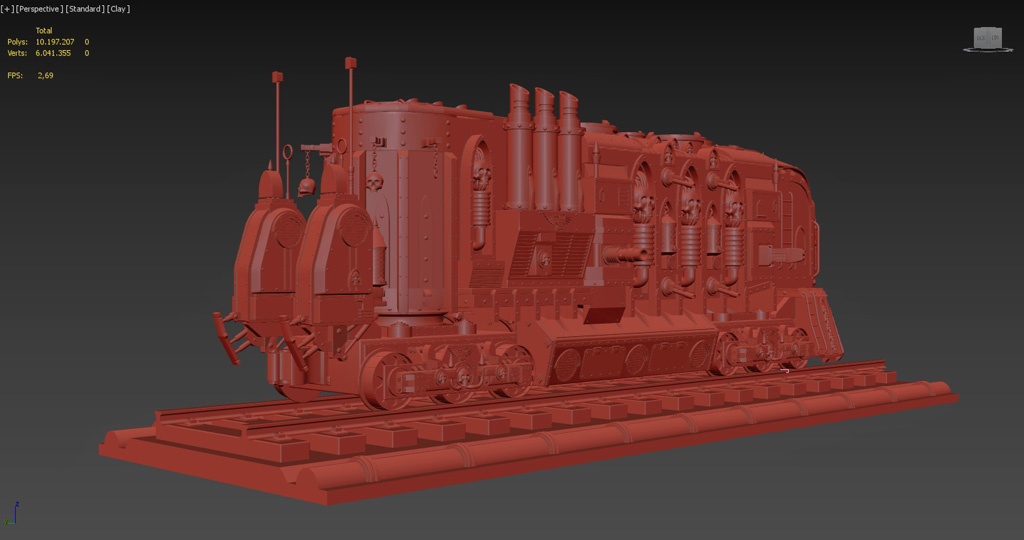
As development progressed, additional work focused on the underside, wheel assemblies, exhaust systems, and structural supports. Although many of these details are not immediately visible in the final render, they contribute significantly to the realism and engineering credibility of the design.
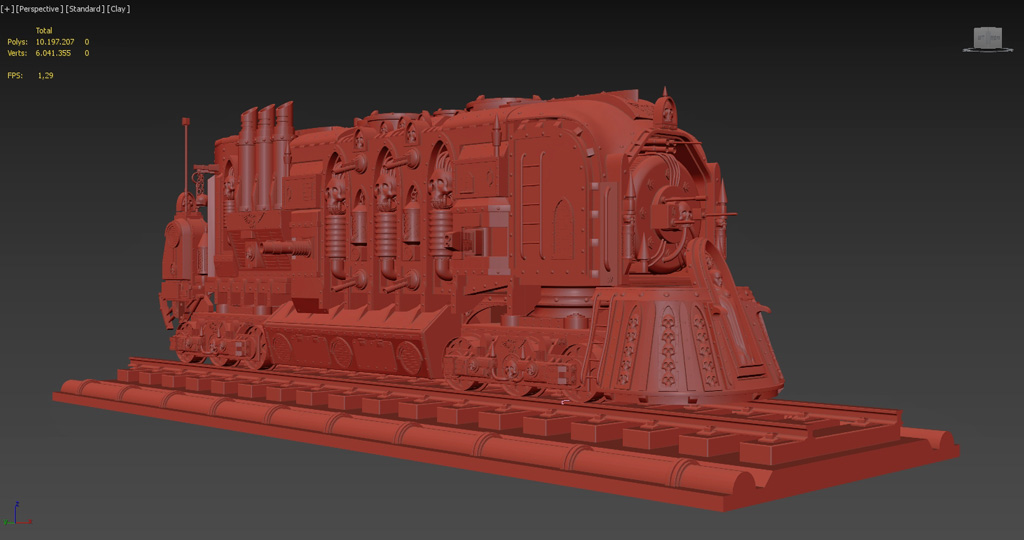
Once all major components were completed, the locomotive was integrated with the railway environment and prepared for final rendering. Careful lighting setup, material definition, and scene composition helped unify the vehicle and environment into a cohesive presentation.
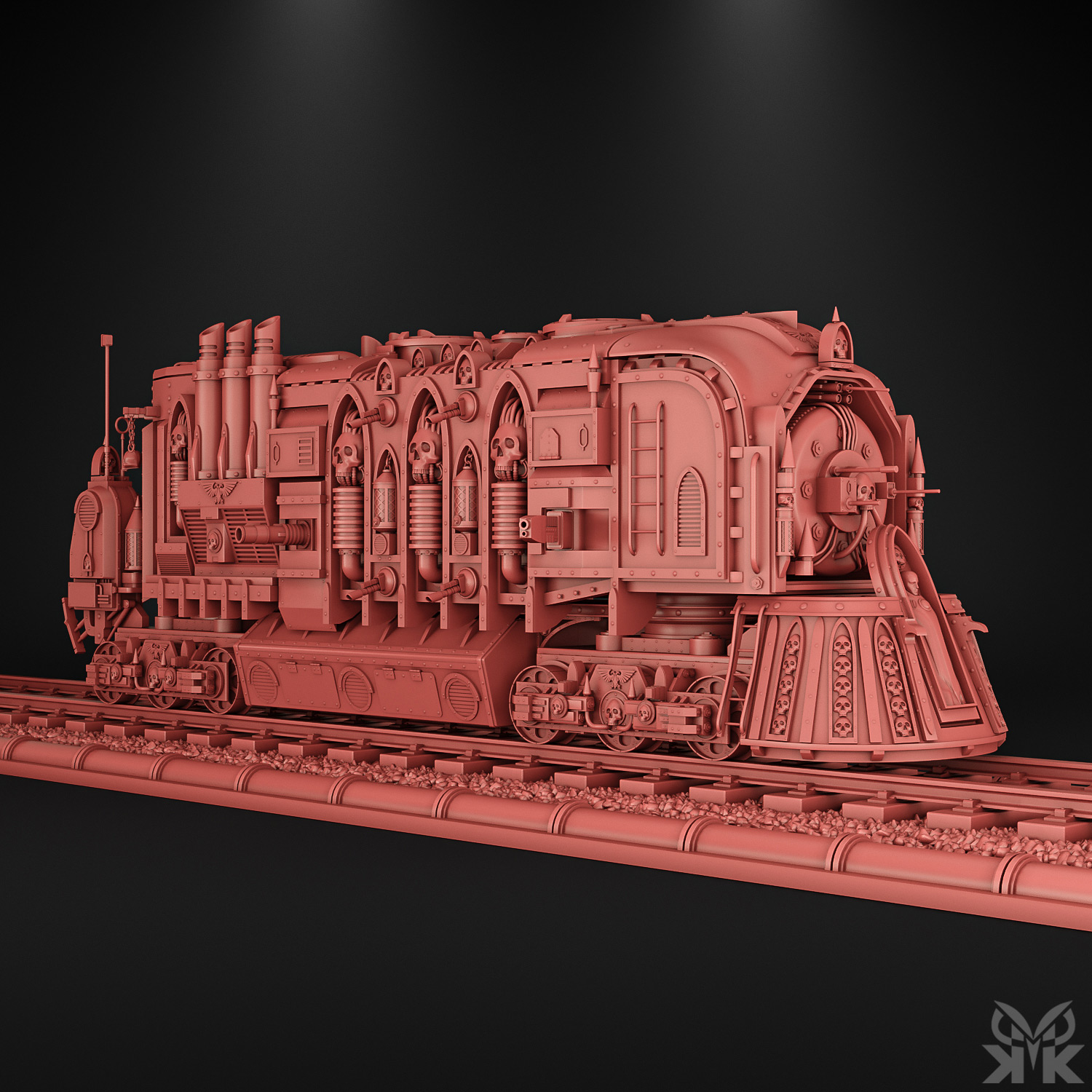
The final render represents the culmination of the entire project, combining hard-surface modeling, environment design, procedural detailing, and visualization into a single scene. The result captures the brutal industrial character and gothic atmosphere that define the Warhammer 40K universe while showcasing a complete vehicle design workflow from concept research to final presentation.
This project provided valuable experience in vehicle design, environment construction, scene optimization, and rendering. More importantly, it demonstrated how careful reference analysis, structured modeling workflows, and iterative refinement can transform a collection of individual assets into a believable and visually compelling Warhammer 40K environment.
Related Keywords
Warhammer 40K Locomotive, Imperial Locomotive Design, Warhammer Vehicle Modeling, Autodesk 3ds Max Modeling, Autodesk Inventor Environment Design, Corona Renderer, Corona Scatter Workflow, Hard Surface Modeling, Sci-Fi Vehicle Design, Gothic Industrial Design, Warhammer Environment Art, Imperial Machinery, Vehicle Visualization, Railway Environment Design, Mechanical Asset Development, Warhammer Vehicle Project, Digital Kitbash Workflow, Environment Modeling, CGI Vehicle Rendering, Sci-Fi Transportation Design, Industrial Vehicle Concept, Game Asset Development, Warhammer Art Project, Vehicle Rendering Workflow, Hard Surface Asset Creation
No Comments