
Gothic Tracery
Gothic Tracery
Modeled in: Plasticity | Unwrapped & Rendered in: Autodesk 3ds Max | Source: F. S. Meyer, Handbook of Ornament (1917)
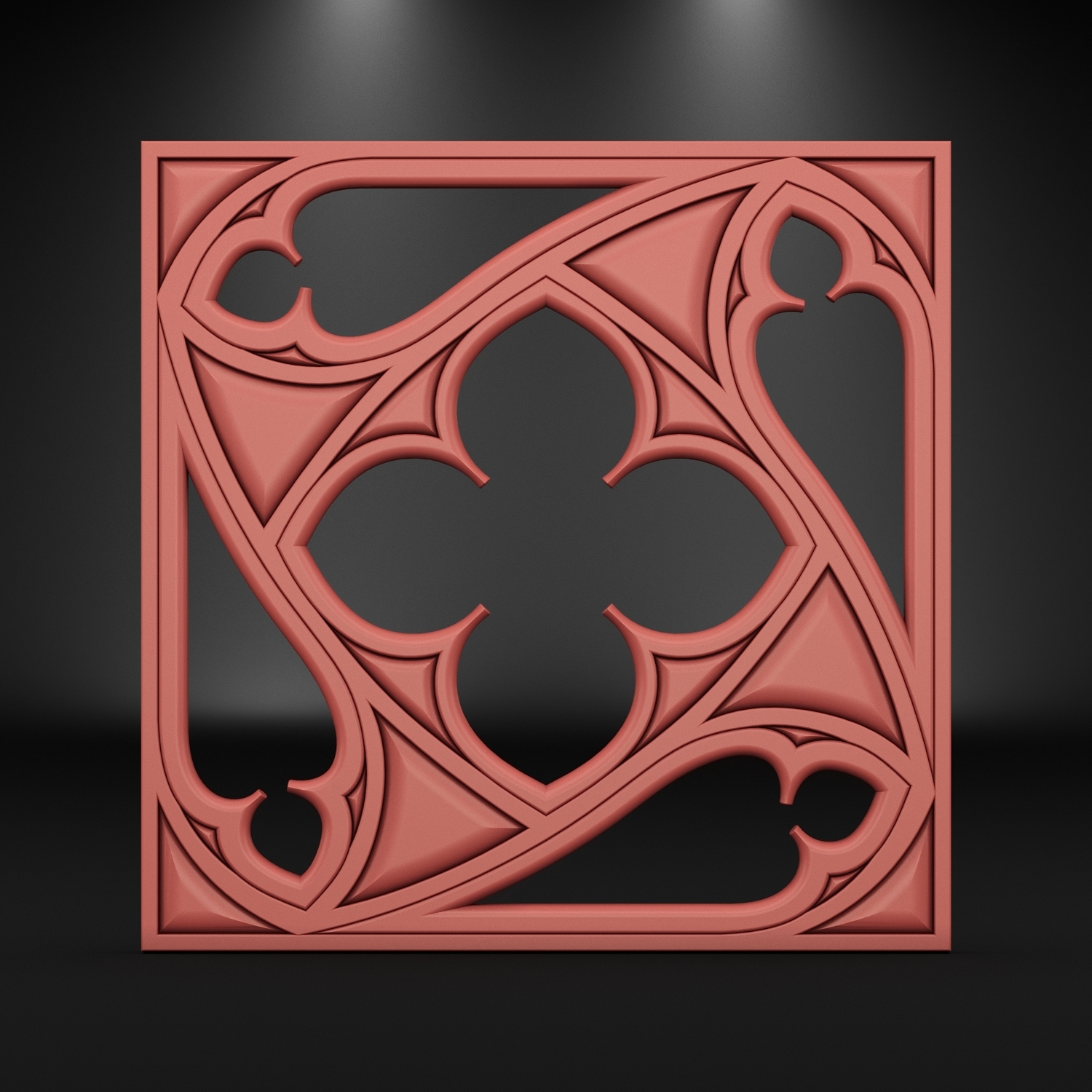
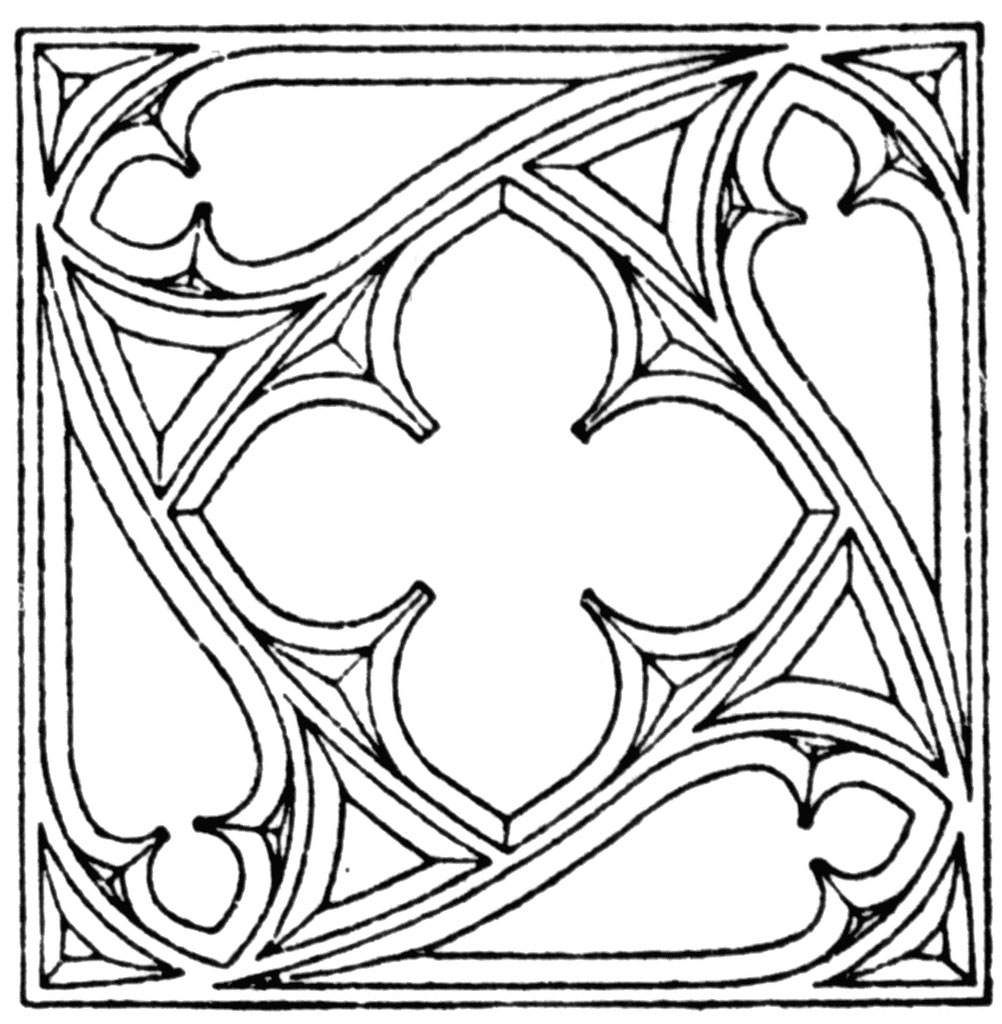
This architectural ornament study is a digital reinterpretation of a historic Gothic tracery pattern published in F. S. Meyer’s Handbook of Ornament (1917). Modeled in Plasticity and prepared for presentation in 3ds Max, the project focuses on the elegant geometric relationships, flowing curves, and structural rhythm that define Gothic decorative architecture.
Particular attention was given to proportion, curvature continuity, negative-space composition, and the precise reconstruction of ornamental tracery. The study explores how traditional architectural motifs can be translated into clean digital geometry while preserving their original craftsmanship, symmetry, and visual harmony.
This clay presentation highlights form development, geometric accuracy, and surface continuity without the influence of materials, reflections, or textures. It allows the intricate tracery, ornamental composition, and overall architectural language to remain the primary focus of the study.
The original ornament design is published in F. S. Meyer’s Handbook of Ornament (1917).
Fan-made architectural study, hard-surface modeling, and visualization by Kemal Korkmaz.
Related Keywords:
Gothic Tracery, F. S. Meyer, Handbook of Ornament, Gothic Architecture, Architectural Ornament, Ornamental Design, Gothic Pattern, Decorative Arts, Plasticity 3D, Autodesk 3ds Max, Hard Surface Modeling, Surface Modeling, Architectural Modeling, Geometric Design, Architectural Visualization, CGI, Digital Art, Clay Render, 3D Modeling

No Comments